by
Where do we go from here?
An implied past purpose,
As if here arrived
On schedule
Riding in a pumpkin coach.
A more pressing question
Presents itself in opposition
To these futuristic obsessions:
How did we get here?
What circuitous route
Turned our wheel
To this position:
A yes, a no,
A drive to believe
In the righteousness of our response;
Or tied to the rack
Our balance wanes
Into a renewed spin,
Until our lives rattle like a ball
Dancing from one allotted
Slot to another never quite
Coming to rest before being
Snatched up and tossed again.
(September 2011)
In the garden the cat pauses
to lick the dew from her paws.
In morning the day is still forgiven.
Night’s chill lingers in the grass.
A dove dips water from St. Francis’ feet
before vanishing between hackberry leaves.
Like hens protecting chicks from a hawk,
Oaks pull back their shadows;
the sun circles the empty sky.
The cat ignores the mockingbird
chattering from a fence post.
Sunflowers umbrella her like saints.
Later the air hides beneath hawthorne.
The basil bends its head to the ground.
Only a butterfly struggles across the yard.
Rising from beneath the deck, the cat
stretches before slipping into the house.
The grass continues its crisp watch.
By midnight the air breathes again;
the sidewalks glow like morning beds
still holding our shape’s warmth.
(Breadloaf, Vermont Summer 1990)
by
As a child in a movie theater
The projectionist would stream light
Through the smoke and dark
Twitching the thin beams like fingers
Nervously tapping a chair’s arm
I would tilt back, watch the strands
Above my head dance across the room
Tracing with light a story upon the screen
I would try to catch the coordination
Between the light’s slight shift
With what was happening on the screen
Searching through the dark for the cause
Of the events unfolding around us
As we sat transfixed, waiting.
(Note: smoking was allowed in theaters when I was a child)
(August 2011)
We keep saying that Johnny can’t read because he’s deprived, because he’s hungry, because he’s discriminated against. We say that Johnny can’t read because his daddy is not in the home. Well, Johnny learns to play basketball without daddy. We do best what we do most, and for many of our children that is playing ball. One of the reasons Johnny does not read well is that Johnny doesn’t practice reading (Reverend Jesse Jackson quoted in Raspberry, 1976 as cited in Thurlow 1984 p.267)
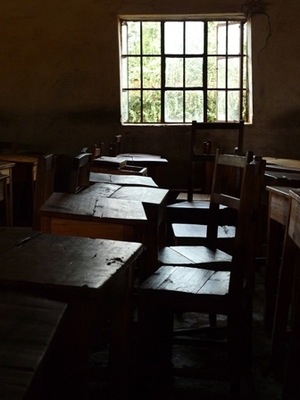
I used to feel that I had to explain the way I teach to people. Sometimes I still feel that way. Fellow teachers in the copy room will ask by way of making conversation, “So, what book are your students reading now?” I used to try to explain how all my students were reading different books; so I really couldn’t tell them off the top of my head why my students were reading. Then because of the way they would look at me, I would feel like I was an incompetent teacher. I could see the thoughts running through their heads: he doesn’t know what they are doing in his class; or worse, he doesn’t do anything in his class. So I felt the need to explain in detail how all of my students chose the books they read, that those books then became the “text” book from which they worked out the reading skills required by the TEKS, that I really did keep track of every book the kids were reading, all 150, and yes, I could tell if they were actually reading the book without giving them a scantron test. And best of all, the students read two books each six weeks. Eventually I just settled on saying, “No, we aren’t reading anything together right now.” Which was true in a way.
We read together all the time, just not the same book. One day a couple of months into the first year I moved to high school after teaching for 15 years in the middle school, my students were reading their books silently. Some were sitting at their desks, others were lying on bean bags, and about four of them were encamped in the hall on the floor. I sat in the doorway on the floor, so I could see both the kids in the hall and the ones in my room. I was reading whatever I was reading at the time. The students knew if they had a question that I would see them and come to them, or they would just come over to where I was reading and talk quietly to me. A history teacher on conference period walked down the hall, saw my students reading in the hall, saw me reading in the doorway and said, “I wish I could just sit and read during class and do nothing.” She walked on, my students erupted, indignation flowing from them like lava roiling across Pompeii. It took me several minutes and a cooling smart-assed comment directed by me toward the history teacher to return my students to a more stable state of being. They were pissed because she assumed we were doing nothing, because they were reading silently to themselves. Reading is one of the two main purposes in my class, the other is writing. They were doing something. For some of them it was one of the hardest things they had ever done in English class: read a book.
At that point in the year, and still around the end of the first six weeks every year, a student, sometimes more than one, will end their first book talk with me by confessing that the book they had just finished was the first book they had read since middle school or the first book they had ever finished. They tell me this with pride. Not that they had managed to pull the wool over their former teacher’s eyes, but with pride that they had finished a book, and they liked it. There is something wrong with that picture. Seniors in high school, all seniors in high school, should have finished a book, and what’s more, one that they enjoyed reading. I am not blaming the students for this lack, but the way we teach reading.
It all seems so simple, in a head-slapping-duh simplicity. In order to read better one must read; it is an activity that improves with the doing. For years I have been instinctively following this guideline in my classroom without any documented research to prove what I was doing had any validity. It just made sense to me. Yet, the teacher down the hall had the same gut feeling that what she was doing was just as correct. For years I had followed the same kind of teaching. I had built elaborate units with interconnected writing assignments and projects; however, it did not seem right to me to say my students were reading when what they were doing was listening to me read to them and mechanically constructing essays that I had come up with for them to formulaically follow.
Most of the “reading” time in my class, now, is spent in Sustained Silent Reading, where the students read from self-selected texts. I have been frowned upon for wasting time in class instead of teaching. So being fairly pig-headed about most things, a few years ago, I did a bit of reading on the effects of reading silently in class from self-selected texts for a literature review for a doctoral class on the teaching of reading. I found quite a lot to show that my gut feeling was not just my nervousness about not doing what everyone else was doing down the hall. It was the right thing to do.
Bibliography for Lit Review
Armbruster, Bonnie B., Wilkinson, Ian, A.G. Silent Reading, Oral Reading, and Learning From Text, The Reading teacher vol. 45, no. 2 October 1991.
Cunningham, Ann E., and Stanovich, Keith E., What Reading Does for the Mind, American Educator, Spring/Summer 1998 pp.1-8.
Fisher, Douglas. Setting the “opportunity to read” Standard: Resuscitation the SSR program in an Urban High School, Journal of Adolescent and Adult Literacy, 48:2 October 2004 pp. 138-150.
Hunt, Lyman C., The Effect of Self-Selection, interest, and motivation upon independent, instructional, and Frustrational Levels, The Reading Teacher, Vol. 50, No.4 December 1996/January 1997 pp.278-282.
Parr, Judy M. and Maguiness, Colleen. Removing the silent form SSR:Voluntary reading as Social Practice, Journal of Adolescent and Adult Literacy 48:2, October 2005 pp.98-107.
McCallum, R. Steve, Sharp, Shannon, Bell, Sherry Mee, and George, Thomas. Silent Versus Oral Reading Comprehension and Efficiency, Psychology in the Schools, Vol.41 (2), 2004.
Methe, Scott A., and Hintze, John M., Evaluating Teacher Modeling as a Strategy to Increase Student Reading Behavior, School Psychology Review, 2003, volume 32, No. 4 pp. 617-623.
Olen, S.I.I., Machet, M.P Research Project to Determine the Effect of Free Voluntary Reading on Comprehension, South African Journal of Library & Information Science, 02568861, Jun97, Vol. 65, Issue 2.
Swalm, James E., A Comparison of Oral Reading, silent Reading and Listening comprehension, Education p.111-115.
Thurlow, Martha, Graden, Janet, Ysseldyke, James E., Algozzine, Robert. Student Reading During Reading Class: The Lost Activity in Reading Instruction, Journal of Educational Research, May/June 1984 (Vol. 77 (no.5) pp267-272.
(August 2011)
“So they sang in sweet utterance
and the heart within me
desired to listen”
-Homer, The Odyssey, Book 12
He listened to the bits of residual conversation
He could remember and reshape like wax to his ear
When he spoke to her now how could he be certain
That what he said mimicked what she heard
The words seemed to move with such easy exchange
Within his assumption of mutual understanding
Her non sequiturs translated his heart
As if all she said danced only his dreams
Yet most of what he heard were only his echoes
Projections of light and shadow upon silence
A rehearsed monologue ignorant of its irony
And to follow that call that hope of consummation
Would be to fall broken into jagged rocks
Desire’s flesh hanging mute on each of their bones
(August 2011)