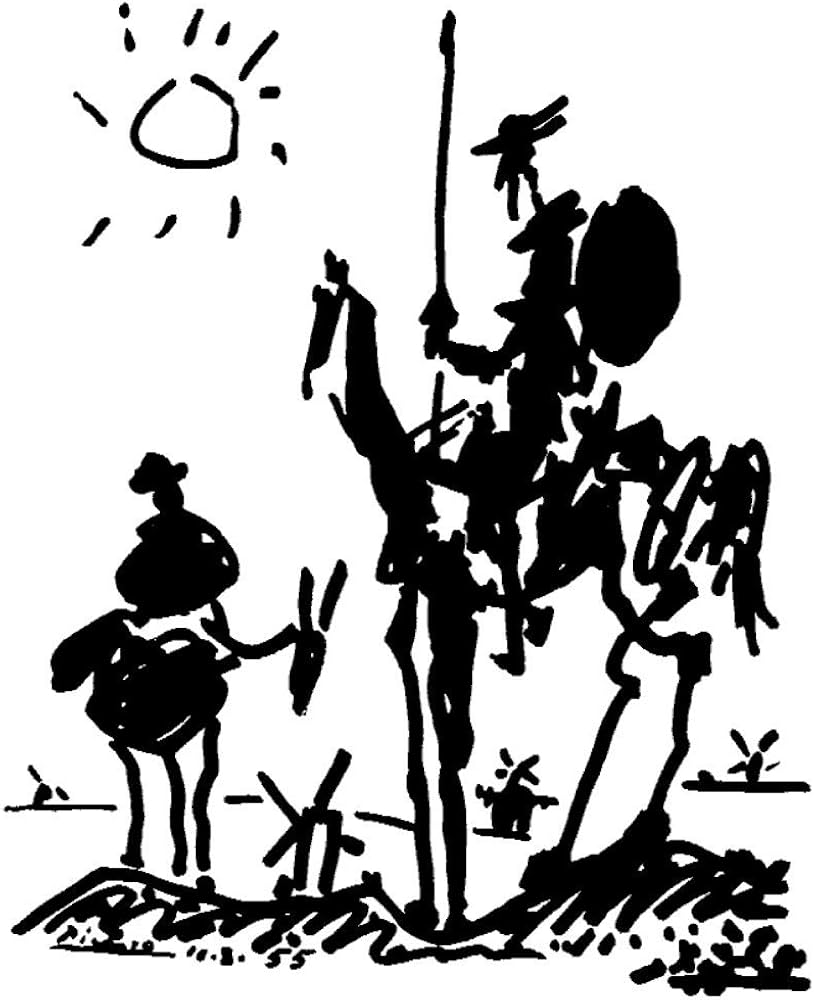
Nine books lie
on my bedside
table, unread:
six poetry,
two non-fiction,
and Don Quixote.
I should finish
Cervantes—
or at least
start— once
again, now
that I’m older,
and his windmills
have turned to giants.
(March 24, 2026)
by
Nine books lie
on my bedside
table, unread:
six poetry,
two non-fiction,
and Don Quixote.
I should finish
Cervantes—
or at least
start— once
again, now
that I’m older,
and his windmills
have turned to giants.
(March 24, 2026)
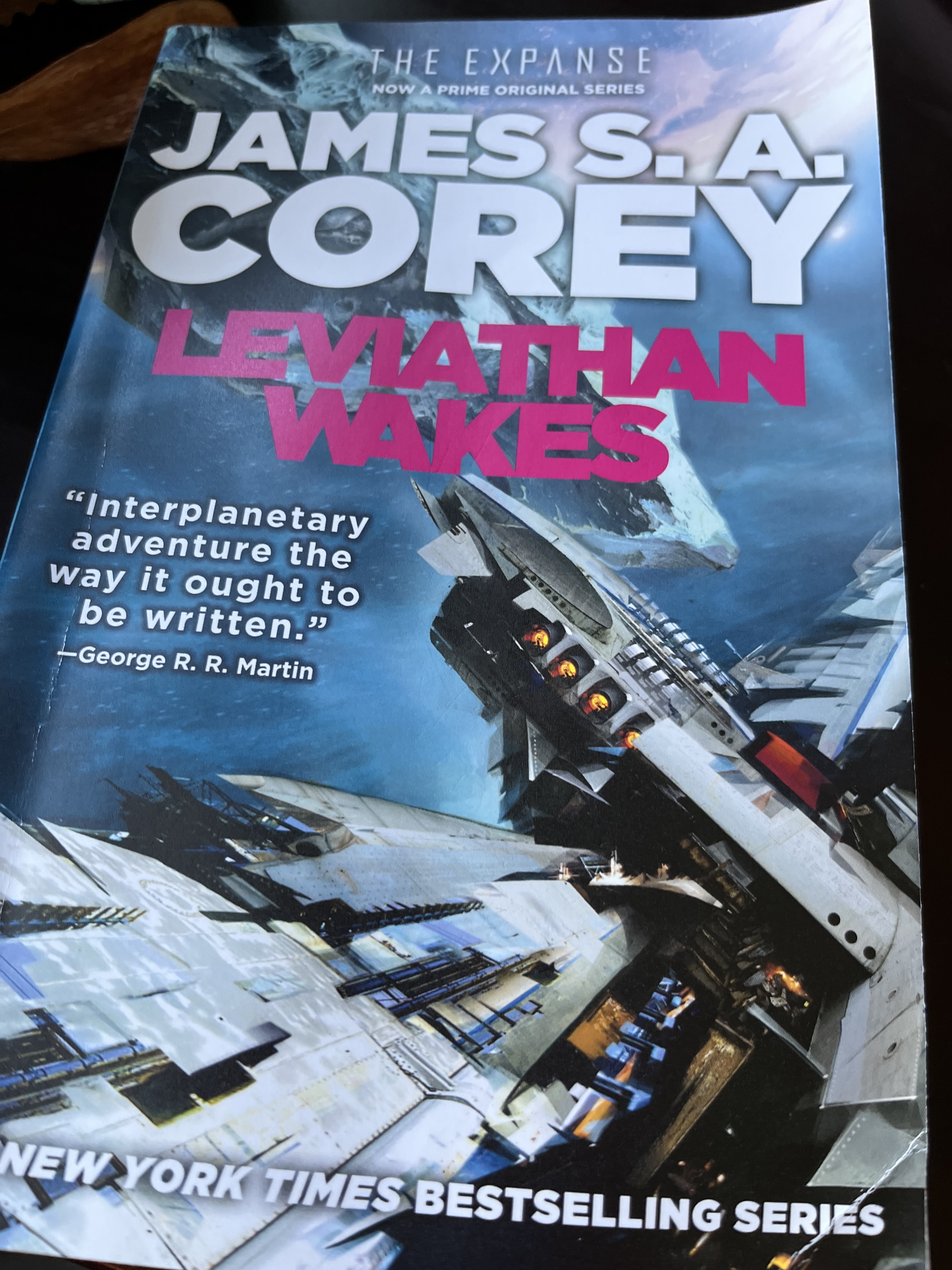
It has been awhile since I read a sweeping epic of a sci-fi novel. I guess it is still awhile to go, since there are like nine more volumes of the series which are collected under the name The Expanse. I probably will not read the rest of the series. This is not to say I did not enjoy Leviathan Wakes, because I did have a good time. I read the book over the last few days. While it is over 500 pages long, it is a fast read uncluttered as it is with the subtleties of an analysis of the human condition. This is not to say it lacks depth, although the book is focused on the narrative more than sweeping themes. It does touch lightly upon colonialism; prejudices and bigotry against those not in your tribe (Earth v. Mars, Earth and Mars v. the Belt); corporations too powerful and focused on gathering more wealth and power over the interests of the people; science v. humanity; loyalty; honor; and love as a unifying force. But I could be over-reading the novel. As they say, sometimes a cigar is just a cigar. I would have loved these books as a teen ager. There is an equally enjoyable television series, The Expanse, which arose from the books. Both the book and the series are worth the time it would take to enjoy them. Sometimes escapism in literature is a good thing.
(March 13, 2026)
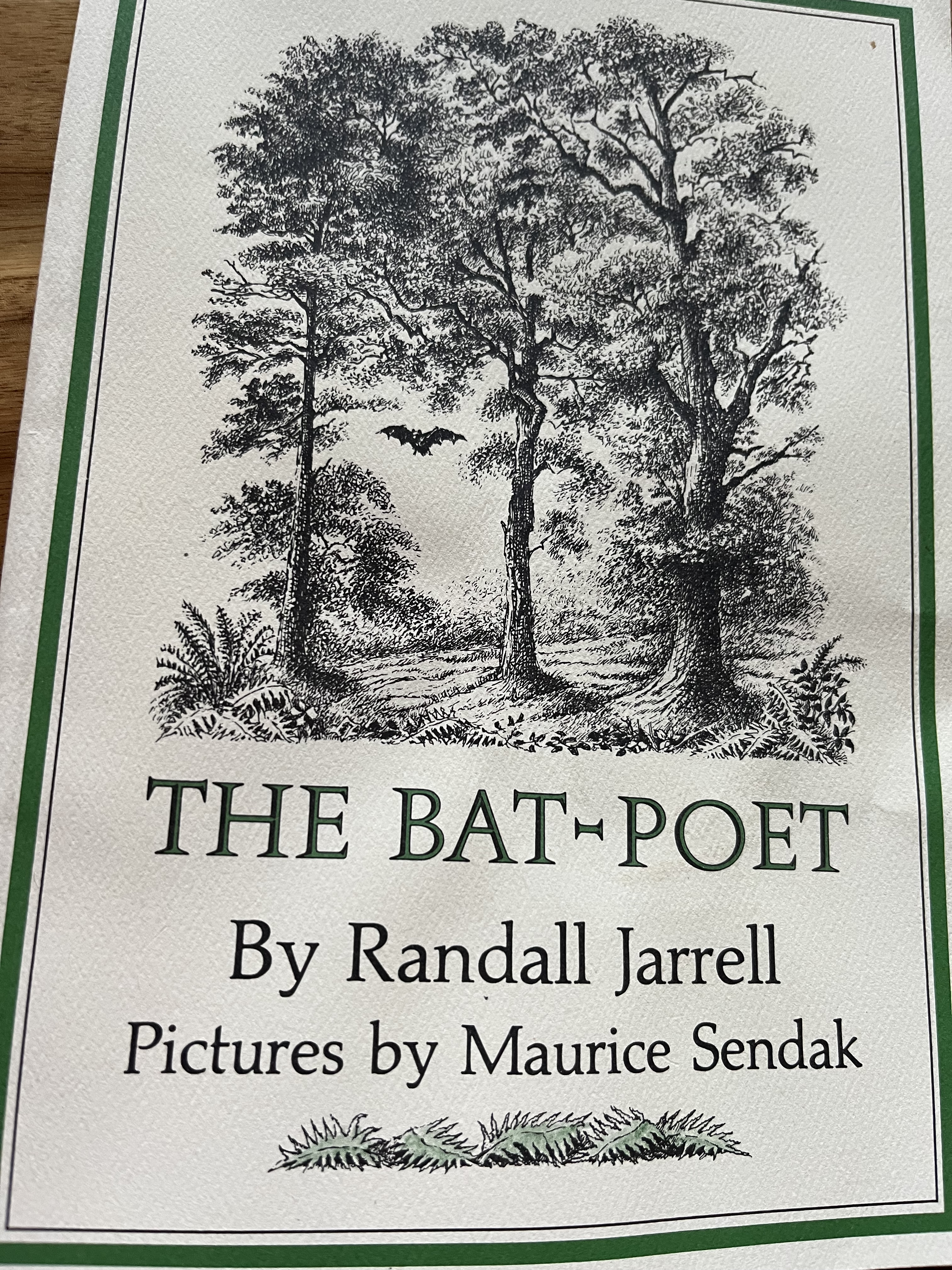
I re-read Randall Jarrell’s The Bat Poet late this afternoon (It is short, 36 pages so don’t be too impressed). I first read The Bat Poet as part of The Hill Country Writing Project (the precursor to the Heart of Texas Writing Project) in 1987. It is such a lovely book about becoming a writer. Lots of analogies between the narrative of the bat and the stages newbie writer’s go through on their journey to being a poet—1) seeing a world different than your peers; 2) finding a mentor (text); 3) writing your first poems 4) mimicking others’ voices 5) finding your voice in your identity; 6) returning to your community with your vision: a mini-hero’s journey! I love the scene between the bat and the mockingbird (the accomplished poet no one understands) when the bat reads a poem he wrote about the owl to the mockingbird. The mockingbird explains the technical aspects of the poem he liked, befuddling the bat who just wrote the poem like the owl was oblivious to the academic names for what he was doing. The illustrations by Maurice Sendak for the book are a bonus.
(March 5, 2026)
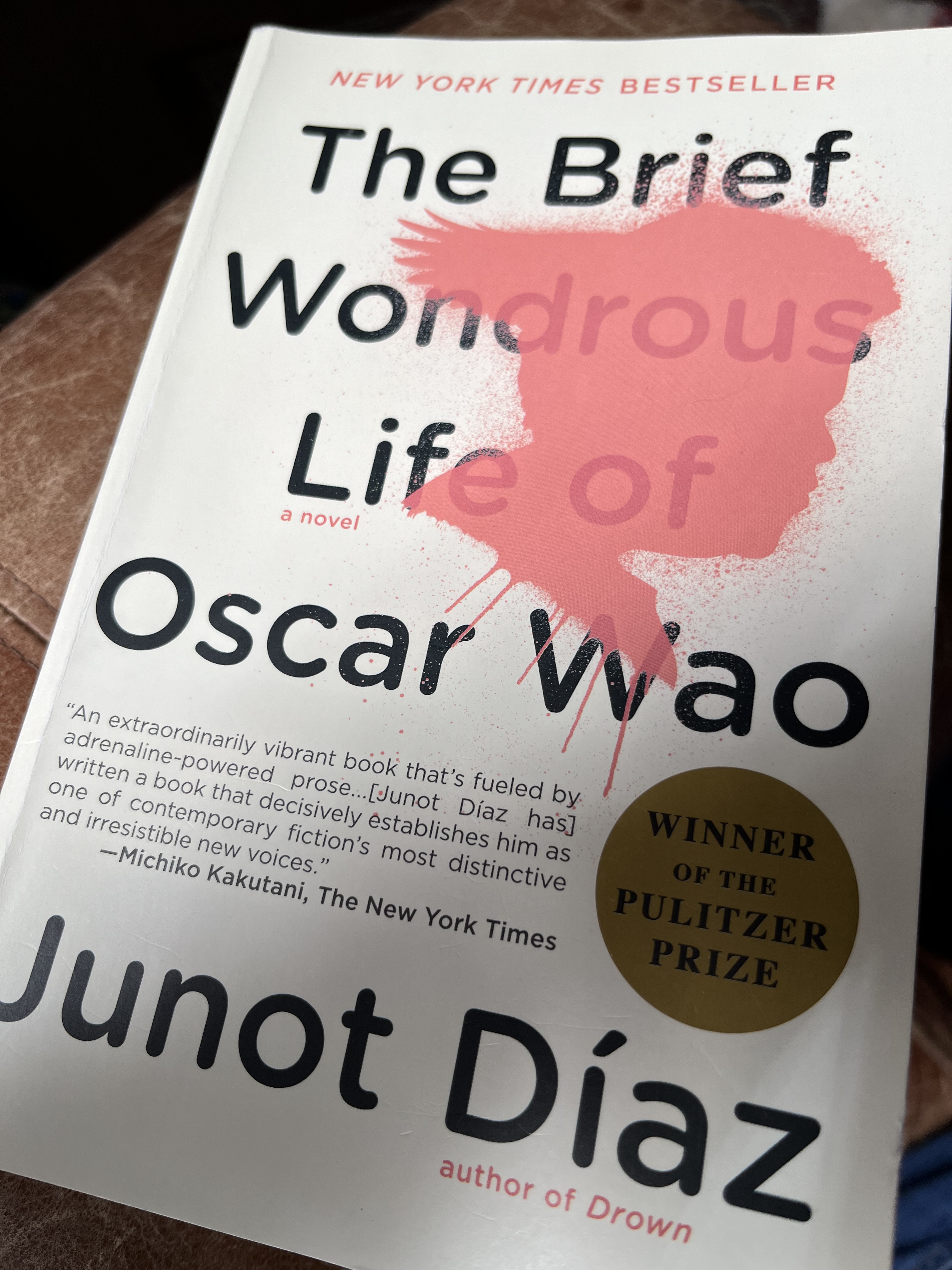
I finished The Brief Wondrous Life of Oscar Wao by Junot Díaz, the RFB book for February, just now. By the end I liked it better than I did while I was reading it. In other words, Diaz brought it to a close masterfully. It is a sweeping family drama story on a simple level. But more so how history-in-person, history-in-place, and how the stories you hear from your family’s history form a large part of your destiny, identity and “fuku” (curse, I believe). Ultimately it is a story of love, albeit a tragic story of love. A line from near the end of the book: “ She was the kind of girlfriend God gives you young, so you’ll know loss the rest of your life.” A line from the narrator, which I believe is the opposite of what was given to Oscar, which was more the kind of girl God gives you so that you will know the power of love to bring you happiness. Even if only for a brief wondrous moment of your life.

I finished “If not, Winter: Fragments of Sappho” by Anne Carson last night. This is the second time I have gone through this book from start to finish. The last time was about 13-14 years ago. I have picked it up randomly over the years reading bits before putting it back on the shelf. When I read it through years ago, I was also reading Carson’s “Eros, the Bittersweet,” which has several essays about Sappho. It helped. Anne Carson, if you don’t know, is an Ancient Greek scholar, who is also (imho) one of the most interesting writers in English today. She is probably best known for “Autobiography of Red,” but NOX should be on everyone’s reading list. As with the last time I read “If not, Winter,” I was reminded of Guy Davenport’s “7 Greeks,” because of the number of poem fragments which were translated with gaps in parentheses. The empty spaces made me think about two things: 1) the importance of silence and the use of space in creating meaning, and 2) how much meaning one word can carry without effort, and how placing simple words next to each other opens portals into other worlds which go beyond what is contained in the solitary words by themselves.
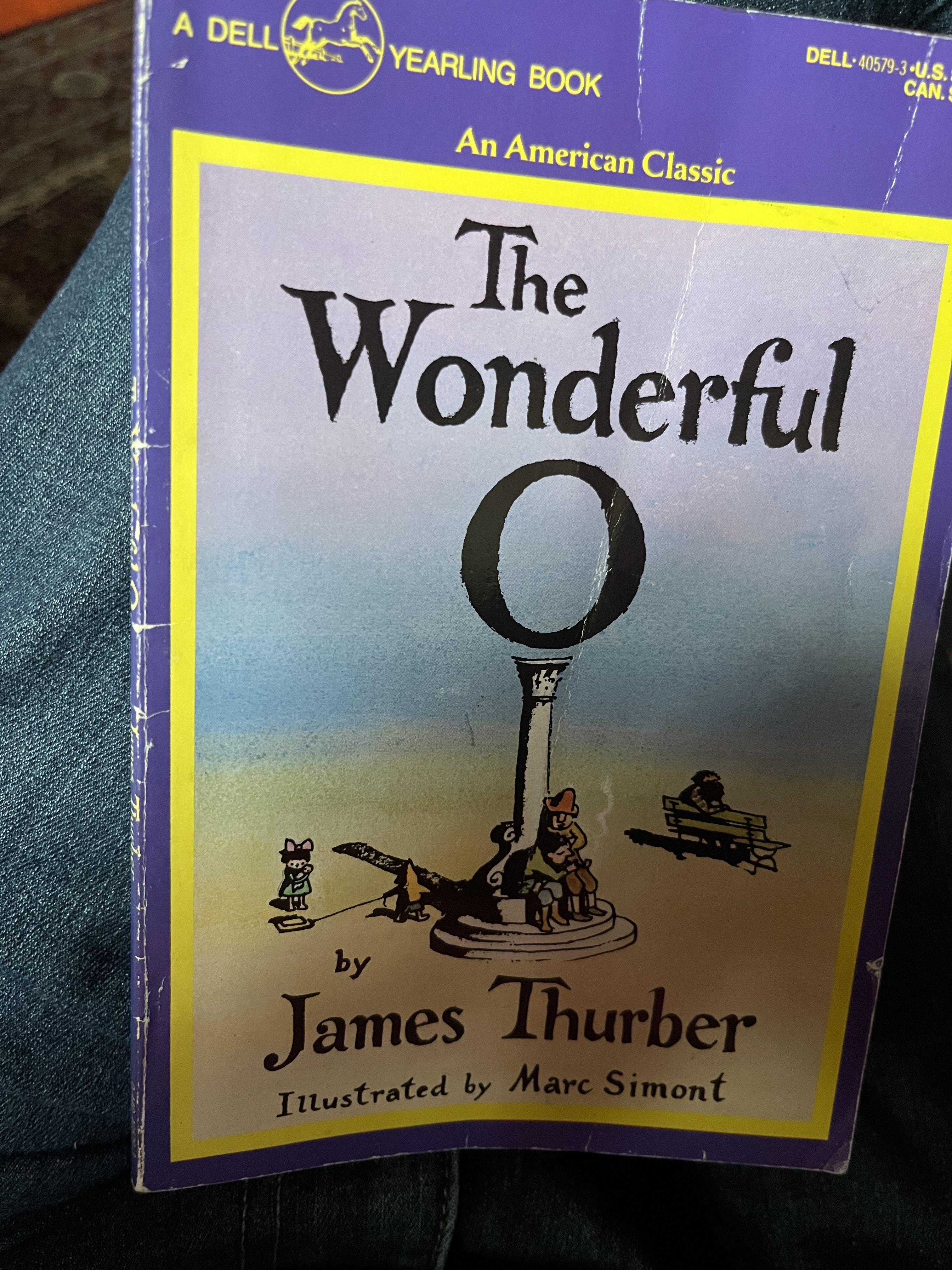
I finished The Wonderful O by James Thurber this afternoon. Thurber is so silly and delightful, while being deeply profound. The Wonderful O, like the other fables of Thurber is marketed as books for children, when they are far from sole audience. The Wonderful O is about two pirates who sail on the ship Aeiu, and hate the vowel O. They are searching for hidden treasure on the island of Ooroo. When they cannot find what they seek, they ban all words which contain the letter O. Cnfusin and Chas descend. The pirates become more and more oppressive with their hatred for O. The people resist, and eventually win out by holding on to four important words which contain O—Hope, Love, Valor, and what is seen as the most important word—Freedom.
It is obviously a fable for our own times although written 68 years ago.
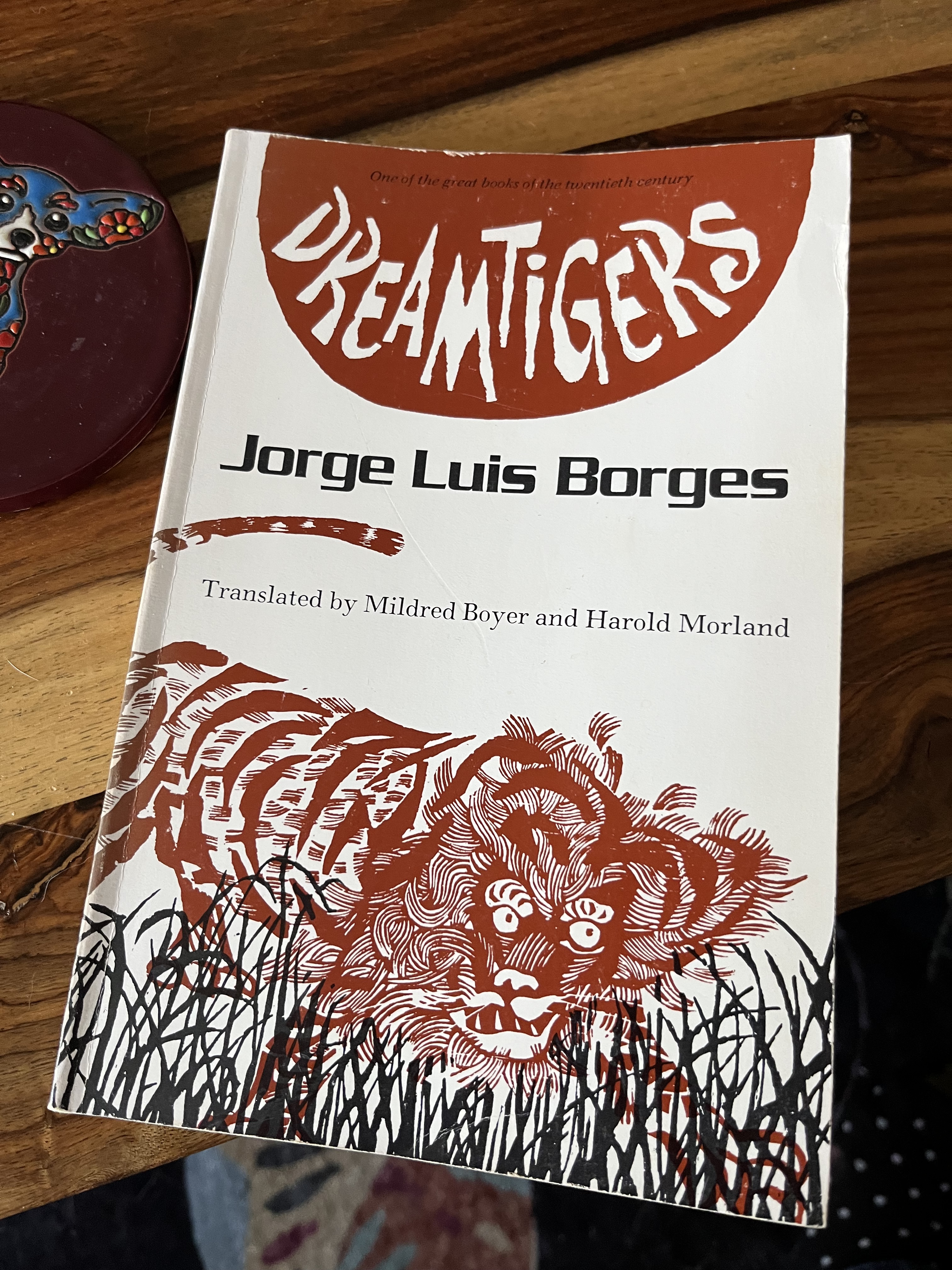
“So many of us use when at our craft/of transmuting our life into words.//The essence is always lost.”
I have read three other books by Borges over the years: Labyrinths, The Book of Sand, and Ficciones. They have all been thought provoking and strange. I first heard of Borges as a fictional character in Umberto Eco’s “The Name of the Rose,” which makes sense as I finished “Dreamtigers” this afternoon. In “Dreamtigers” one of the themes Borges causes the reader to think about is identity. Specifically who is the real “Borges” (and us by extension) the one created by us that we present to the world as us, or the one that created the presentation. “Dreamtigers” is divided into two sections. The first comprised of parable-like reflections revolving around themes of memory, identity, creativity, and mirrors. The second section made up of poems, which touch upon similar themes and images. One of the ideas that have lingered with me after finishing the book is the thought that our unique experience of life which each of us possess and create though our life…vanishes as we die. “Events far-reaching envoy to people all space, whose end is nonetheless tolled when one man dies, may cause us wonder. But something, or an infinite number of things, dies in every death, unless the universe is possessed of a memory, as the theosophists have supposed.” I know that this is obvious, but also profound. Nietzsche said that in the end we only experience ourselves. And Borges extends this with the thought that this individual experience dies with the life of the person. Unless as he says, the universe possess a memory. And even then, that memory is changed and erased by the future which remembers us in their own individual experiences. “There is not a single thing on earth that oblivion does not erase or memory change, and when no one knows into what images he himself will be transmuted by the future.”
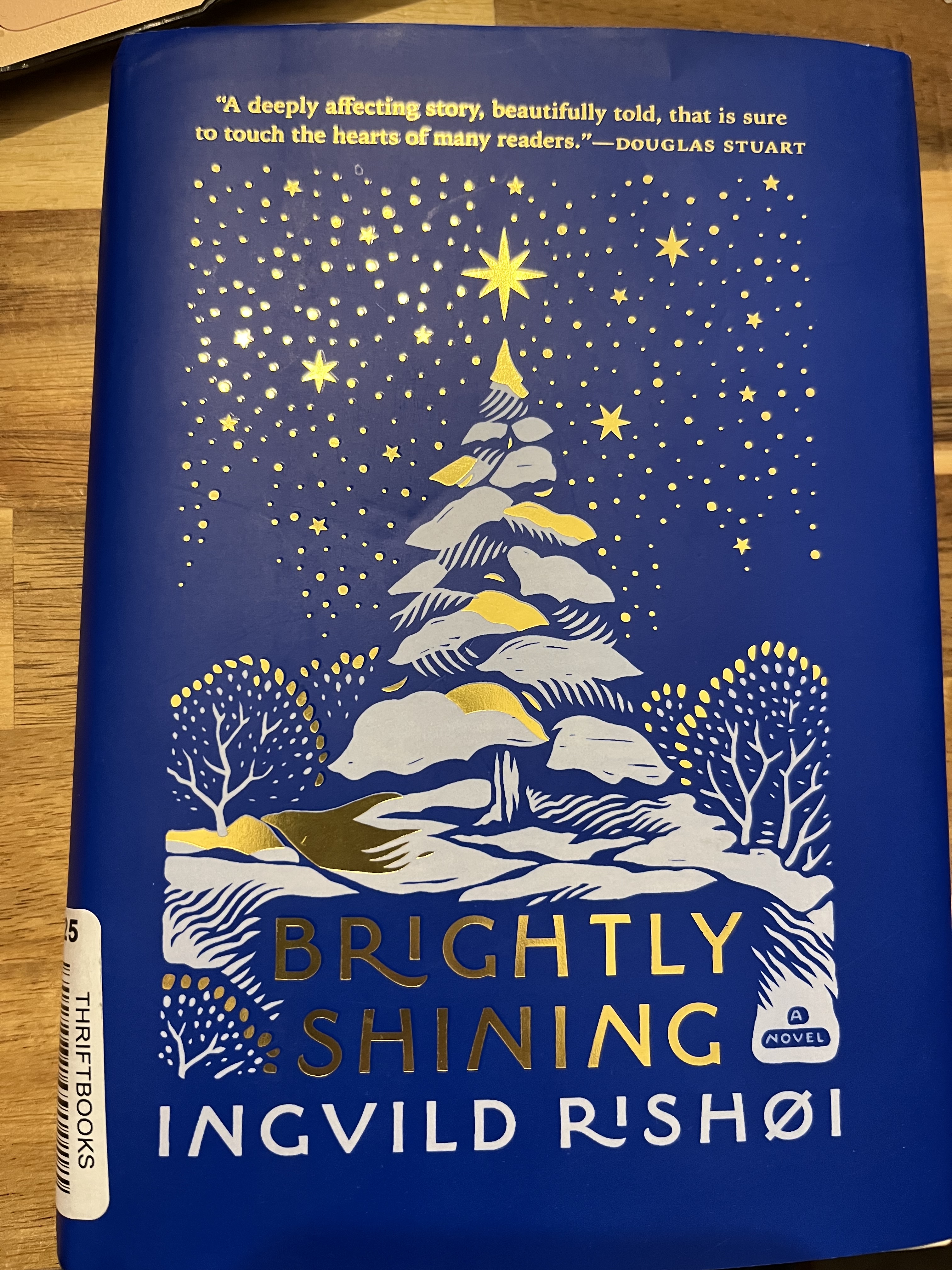
I guess I am just a cold hearted humbug. I finished reading Brightly Shining by Ingvild Rishoi over the last couple of days, and found it to be a sad little retelling of the Matchstick Girl. I went to the internets to see if what I saw was not just my bitter heart. Most of others opinions loved the book for its Charles Dickins-like Christmas sadness. It just seemed all so predictable and pat. One reviewer compared it to Barbara Kingsolver’s reworking of David Copperfield in her Demon Copperhead…but I don’t think Brightly Shining holds up to that comparison. There is just not that much there. It is just a sad story about two young girls who have to deal with an alcoholic father during the run up to Christmas. I have to admit when I first picked up the book for RFB (my book group) I though it looked like a Hallmark Christmas Rom-Com. In its favor it wasn’t that, instead it was a sad tale about being poor and caught up in troubles larger than a child can handle. I’m sure it makes many shed a tear or two. But not me.
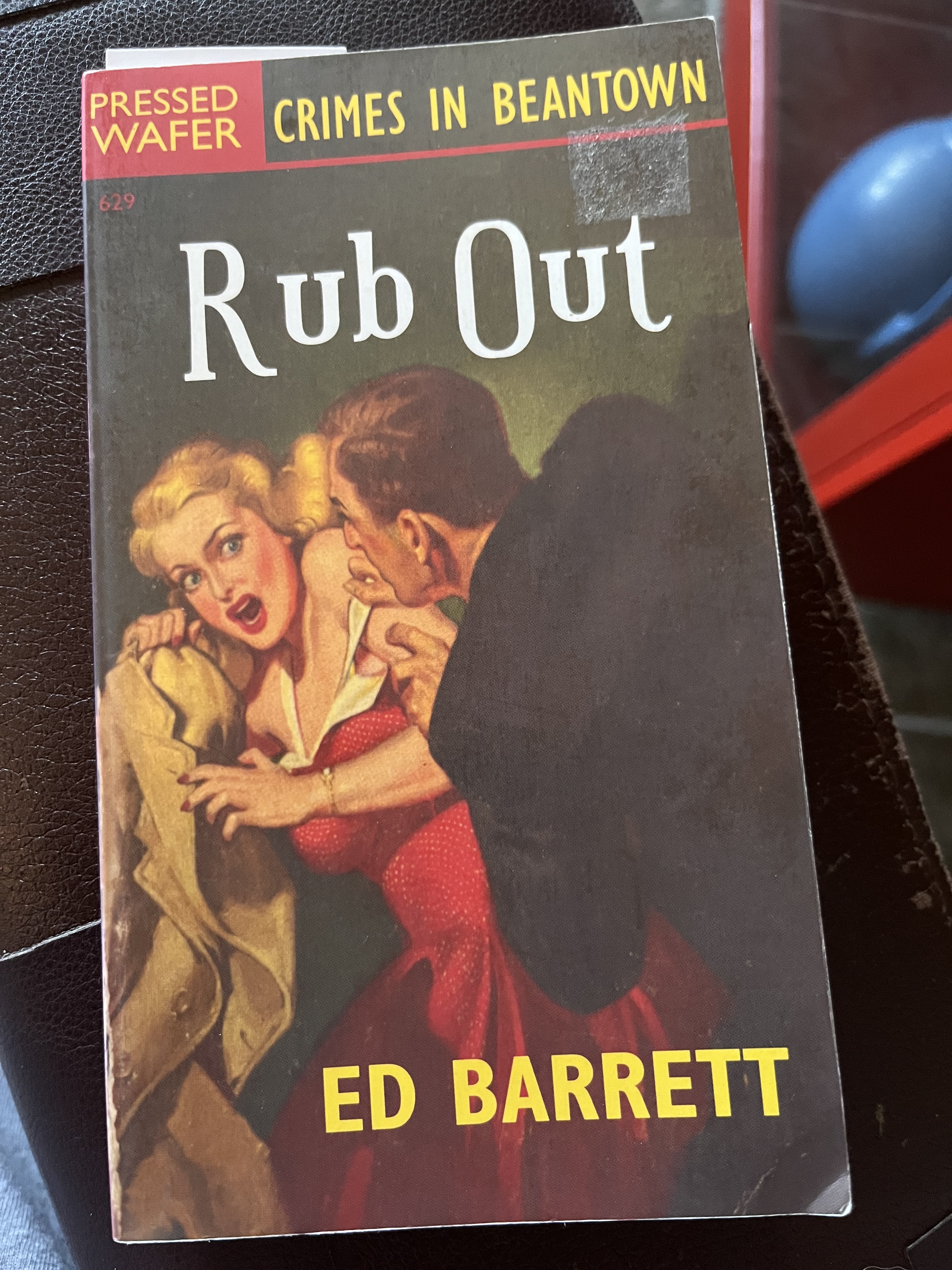
I finished Rub Out by Ed Barrett last night. I have no idea where or when I bought this book. But I found it on my shelf a few months back and have been reading at it since then. It is an interesting set of poems as a mystery novel/1940’s crime noir as if written by John Ashbery. I’m thinking I need to read it again, over a shorter amount of time. I also think I should find someone to read it with, so that I have someone to talk to about it. Here is a quote I copied down several weeks ago: “expectation outweighs desire for most of life”

I finished There are Rivers in the Sky a couple of days ago. Usually I try to respond as soon as I finish a book, but this time it had to ferment a bit before I could respond. Not that the couple of days more has made it more clear what I am thinking. We read one of her books, 10 Minutes 38 Seconds in This Strange World, for RFB last year. I really liked it, so I looked forward to reading Rivers in the Sky. Like 10 Minutes, Rivers is built around multiple story lines which by the end of the novel converge nicely without sounding forced. Both books stress the importance of community, 10 Minutes on a small group of divergent friends, whereas Rivers weaves a broader tapestry across centuries if not millennia. The connecting thread across time is the Mesopotamian Epic of Gilgamesh, the earliest written piece of world literature arising from the earliest civilization. Which of course, is significant to the novel as a whole. One of the story lines is set in Victorian England (the height of the English Empire), when England is pillaging the past Empires of relics and putting them on display in the British Museum. One of the relics they find is the before unknown Epic of Gilgamesh. It is found in fragments, over time, mainly in the abandoned ruins of the once great city of Nineveh. Another story line involves a small group of people, descended from the Sumerians, considered to be devil worshippers by the dominant religious groups. While the third story line, also descendants from the region of Mesopotamia, Iraq, who have immigrated to contemporary England. Through all three threads, the importance of story, the written word, tradition, and change flow like the rivers,(The Thames and Tigris), which dominate the imagery in the novel. The pollution, re-birth(in the case of the Thames), the destructive and nurturing aspects of the rivers and water in general are constantly in play. Overall it was an enjoyable experience.
One quote out of dozens I underlined: “Hatred is a poison in three cups. The first is when people despise those they desire—because they want to have them in their possession. It’s all out of hubris! The second is when people loathe those they do not understand. It’s all out of fear! Then there is the third kind—when people hate those they have hurt”
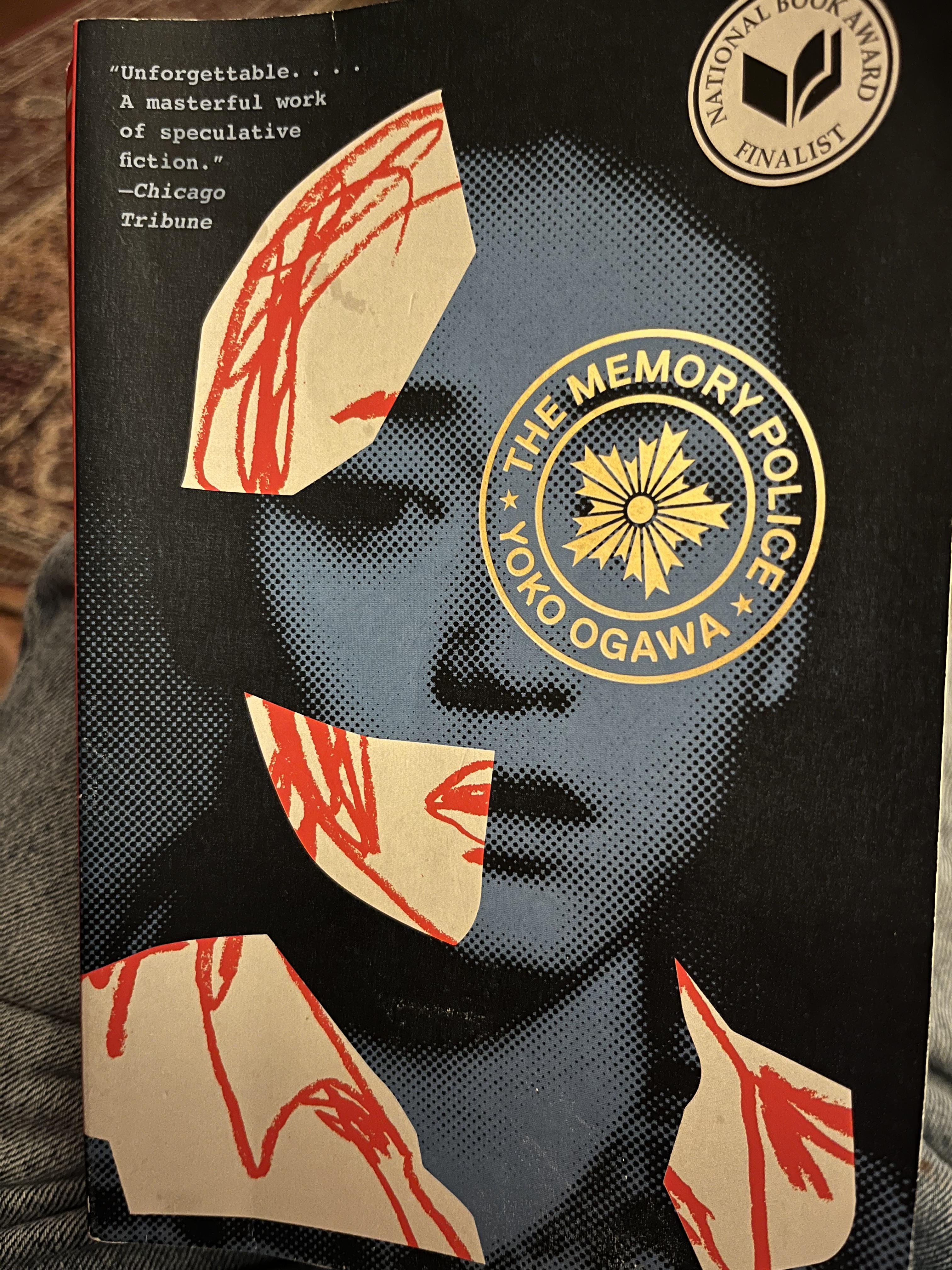
I finished the Memory Police last night, but couldn’t summon enough energy to write a response. It was curious. It was interesting. It was ART!! Were there great lines and thoughts? Yes. Did it make sense? Not at first glance, which this response is. The novel (as the blurb on the back states) takes place on an unknown island where objects keep disappearing. Disappearing completely, even from the memory of most of the people on the island. Those who can still remember are taken away to some unknown place, for some unknown fate by the Gestapo-like Memory Police. The last sentence of the blurb says “The Memory Police is a stunning novel about the trauma of loss.” I guess that is true, but only on one level. I would say it is more about the control of a community’s narrative; How history can be erased, and how we all just go along. How writing extends and saves individual memory for the next generations, who lose and save and create their own memories. How small seemingly unimportant objects can embody massive recollections.
Random Thoughts/Questions: None of the characters have names. There is a narrator, the novelist; the old man, who used to be the ferryman before the ferry disappeared, and R, who does not forget. The novelist is writing a novel, which sporadically we (the reader) get to read.Is the old man an allusion to Charon? Are the people who forget dead? The narrator is writing a novel, but loses her voice and can’t remember how to write. R, who used to proofread the narrator’s novels, keeps encouraging her to write, almost like editors who finish novelists books posthumously. Does “R” stand for reader? which is us, as we try to create meaning out of other’s incomplete memories?
Quotes:
“When I was a child, the whole place seemed… a lot fuller, a lot more real. But as things got thinner, more full of holes, our hearts got thinner, too, diluted somehow, I suppose that kept things in balance… And even when the balance begins to collapse, something remains.”
“I have the feeling my voice may come back one day if I study the letters imprinted on the used ribbon.”
“I’d imagine you’d be uncomfortable, with your heart full of so many forgotten things.”
“Memories don’t just pile up—- they also change over time. And sometimes they fade of their own accord.”
“Each one of us hides them away in secret. So, since out adversary is invisible, we are forced to use out intuition. It is extremely delicate work. In order to unmask these invisible secrets, to analyze and sort and dispose of them, we must work in secret, to protect ourselves.”
“Memories are a lot tougher than you might think. Just like the hearts that hold them”
“When you lost your voice, you lost the ability to make sense of yourself.”
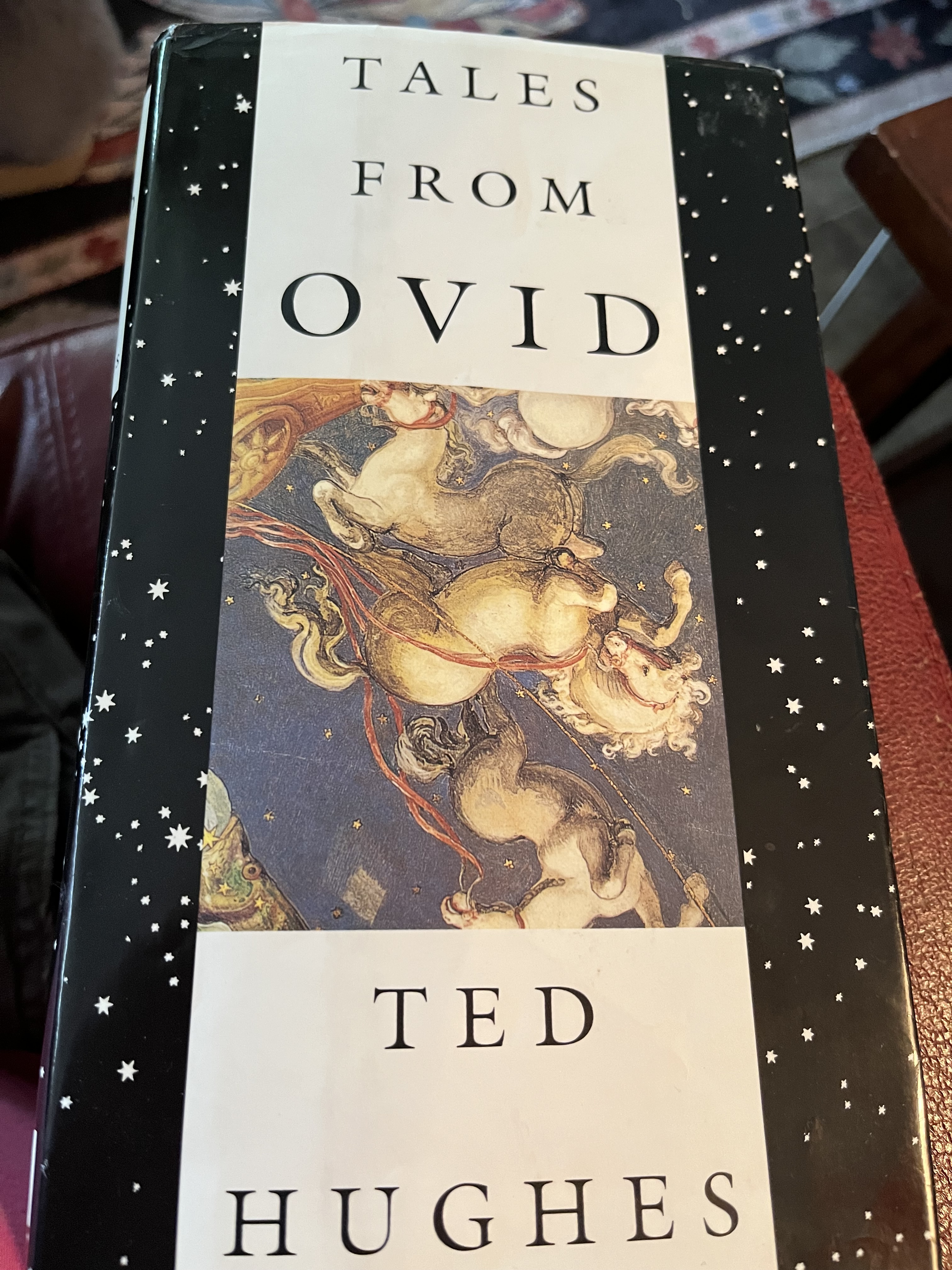
Finished this today. Kind of like The Metamorphoses’ Greatest Hits. That is not a criticism. I had not heard of some of the tales, and I liked the non-bowlderized versions of the others, having read most of the tales in kids versions to my children decades ago. It was a fun read. If you see it used somewhere, it is worth picking up. Trivia for some of you guys: Ted Hughes was married to Sylvia Plath. ( I like pointing that out since he was apparently an ass to her. Now to the younger readers, he is a footnote to her. He was no slouch as a poet, however. The Crow is especially good as I remember).
September 24, 2025)
 subtext