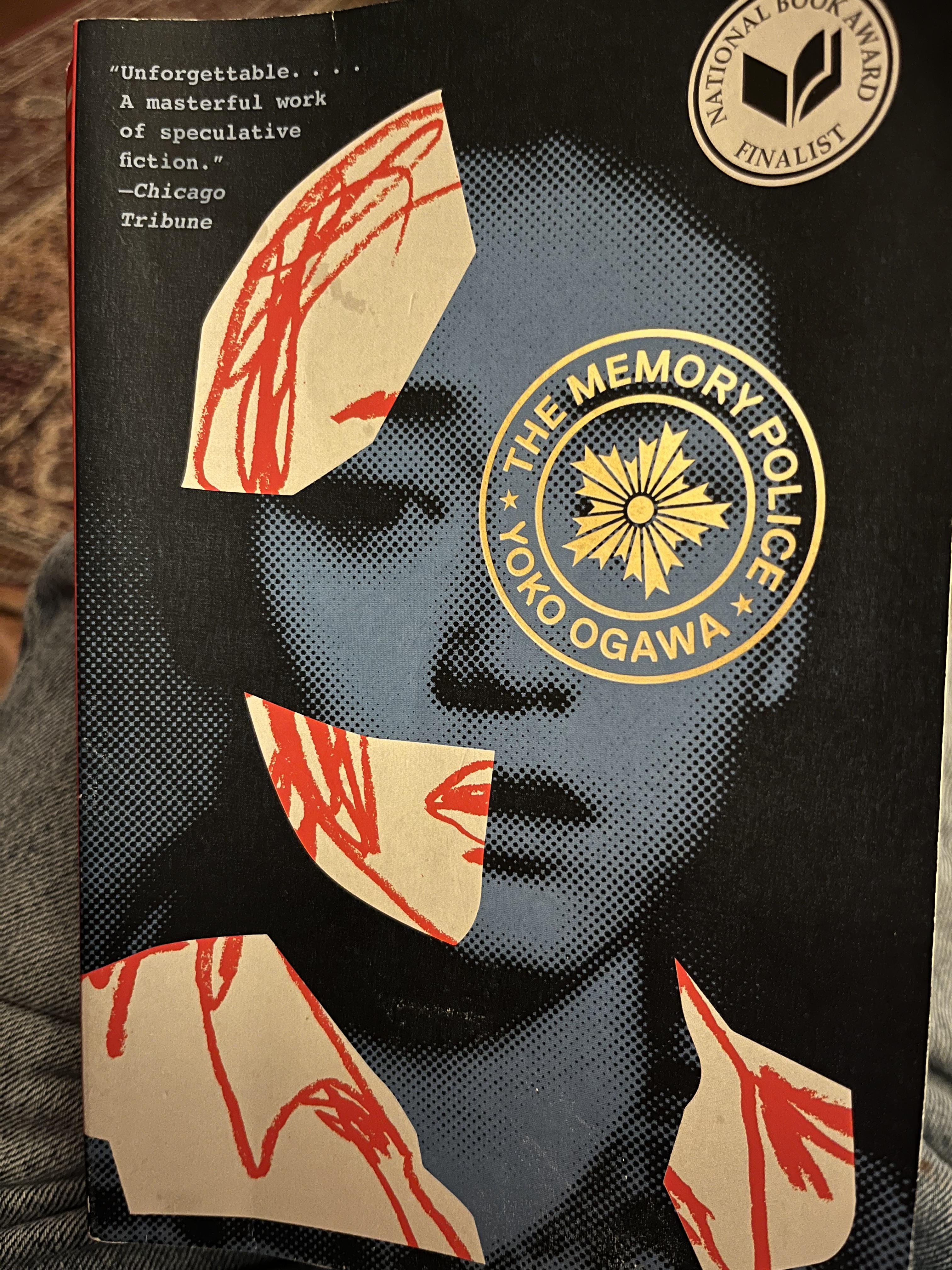
I finished the Memory Police last night, but couldn’t summon enough energy to write a response. It was curious. It was interesting. It was ART!! Were there great lines and thoughts? Yes. Did it make sense? Not at first glance, which this response is. The novel (as the blurb on the back states) takes place on an unknown island where objects keep disappearing. Disappearing completely, even from the memory of most of the people on the island. Those who can still remember are taken away to some unknown place, for some unknown fate by the Gestapo-like Memory Police. The last sentence of the blurb says “The Memory Police is a stunning novel about the trauma of loss.” I guess that is true, but only on one level. I would say it is more about the control of a community’s narrative; How history can be erased, and how we all just go along. How writing extends and saves individual memory for the next generations, who lose and save and create their own memories. How small seemingly unimportant objects can embody massive recollections.
Random Thoughts/Questions: None of the characters have names. There is a narrator, the novelist; the old man, who used to be the ferryman before the ferry disappeared, and R, who does not forget. The novelist is writing a novel, which sporadically we (the reader) get to read.Is the old man an allusion to Charon? Are the people who forget dead? The narrator is writing a novel, but loses her voice and can’t remember how to write. R, who used to proofread the narrator’s novels, keeps encouraging her to write, almost like editors who finish novelists books posthumously. Does “R” stand for reader? which is us, as we try to create meaning out of other’s incomplete memories?
Quotes:
“When I was a child, the whole place seemed… a lot fuller, a lot more real. But as things got thinner, more full of holes, our hearts got thinner, too, diluted somehow, I suppose that kept things in balance… And even when the balance begins to collapse, something remains.”
“I have the feeling my voice may come back one day if I study the letters imprinted on the used ribbon.”
“I’d imagine you’d be uncomfortable, with your heart full of so many forgotten things.”
“Memories don’t just pile up—- they also change over time. And sometimes they fade of their own accord.”
“Each one of us hides them away in secret. So, since out adversary is invisible, we are forced to use out intuition. It is extremely delicate work. In order to unmask these invisible secrets, to analyze and sort and dispose of them, we must work in secret, to protect ourselves.”
“Memories are a lot tougher than you might think. Just like the hearts that hold them”
“When you lost your voice, you lost the ability to make sense of yourself.”
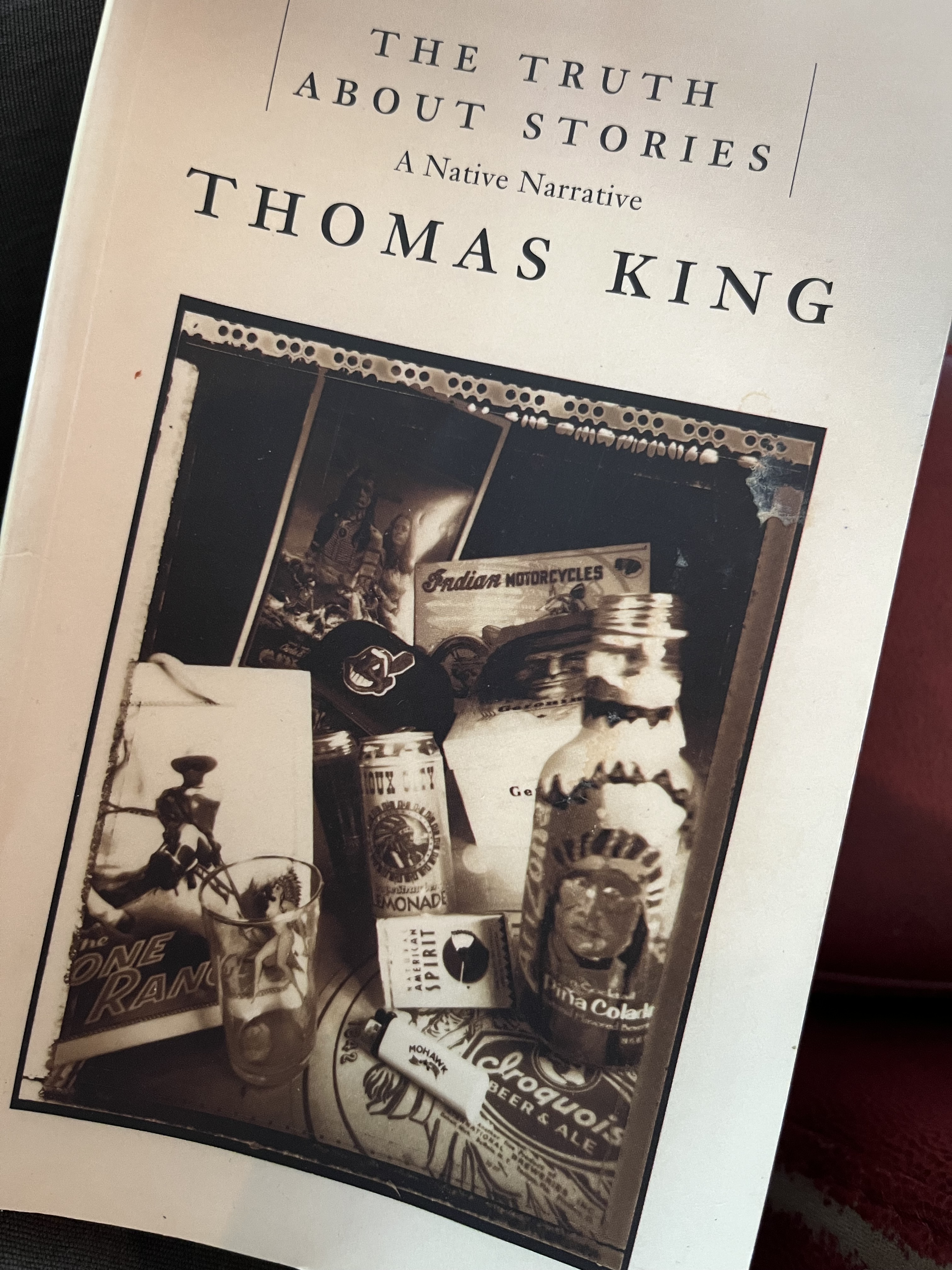
This is the second, maybe third, time I have read this book. It is that good. Oscar Wilde wrote that a book that isn’t worth reading twice is not worth reading once. The Truth about stories is worth reading once, maybe even three times. “The truth about stories is that is all that we are.” King repeats throughout the book as he tells stories within stories, mixing personal narrative with native “myth” and historical facts to illustrate, expand and deepen each section/chapter of his book. His themes are identity, how we become who we think we are, how we can change who we think we are; How others come to define us through the stories they tell about ourselves and themselves; and that we can change our world by changing the stories we tell each other. King is an indigenous Canadian. He focuses early on in the book about how one is an Indian, and how a large part of that definition is provided by the non-indigenous, from how one is supposed to dress to be seen as authentic, to convoluted arcane laws developed by the government in their attempts to control and eventually eliminate the Indian. He has a wonderful light touch in his writing style that makes an otherwise grim tale less horrific without sounding paternalistic. King begins each chapter with the story of the world carried on the back of a turtle, which is carried on another turtle ad infinitum. I assume to point out that there is never a sole basis for the story we live within. He ends each chapter in a similar way connecting the end to one of the stories from that chapter. Here is one of them: “Take it. It’s yours. Do with it what you will. Tell it to your children. Turn it into a play. Forget it. But don’t say in the years to come that you would have lived your life differently if only you had heard this story. You’ve heard it now.”
I finished reading (again) I, Claudius by Robert Graves this morning. It is the RFB book for July. I first read it when I was in high school, forty years ago. I loved it then, and loved it again this time. It is a historical novel, set in Imperial Rome, told from the point of view of Claudius, who is seen as a harmless buffoon by his murderous relatives. Because of their opinion of him, he manages to survive all of the palace intrigues, and by the end of the novel, becomes emperor of Rome. (This is not really a spoiler if you have any knowledge of Roman history). The book ends with Claudius being declared emperor. In the sequel Claudius the God, his stint as ruler of Rome is told. I don’t have any plans on reading it again, but who knows. I remember it being as fun as I, Claudius. I, Claudius is funny, and historically accurate, as far as I know. The colder than ice ambitions of the characters as they maneuver for power is stunningly familiar to the current political situation here in the US. (sadly).
“If you haven’t read hundreds of books, you are functionally illiterate, and you will be incompetent, because your personal experiences alone aren’t broad enough to sustain you.”
—General John Mattis
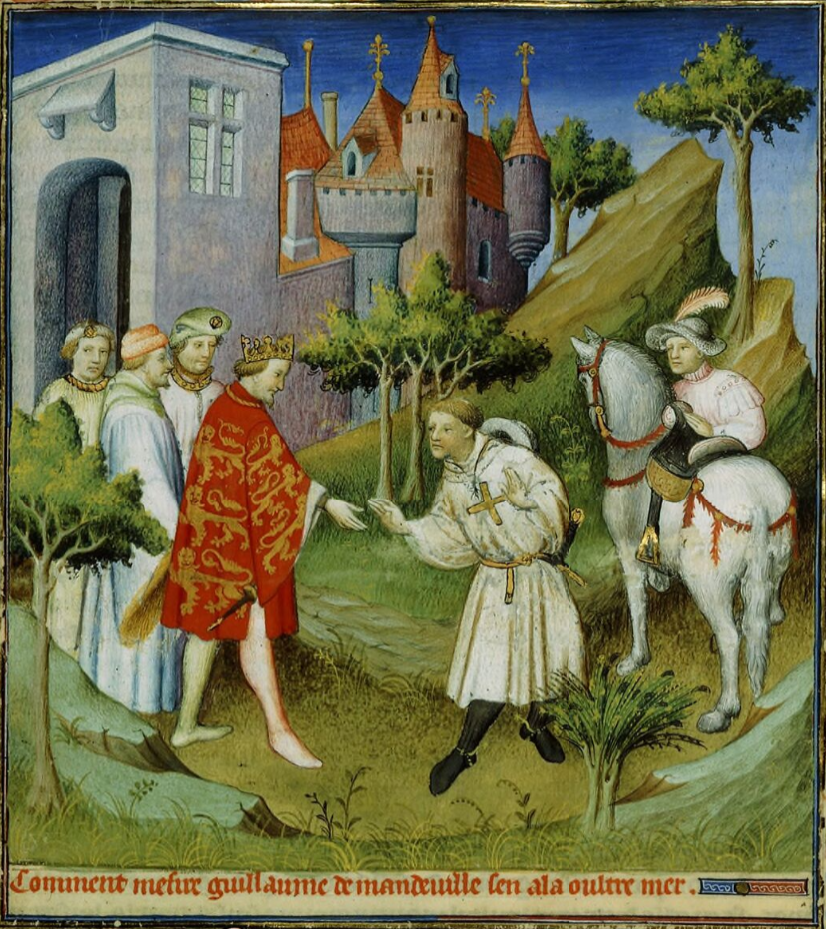
Some days the distance across the room is problematic. Like now, I am reminded of a book by something I just read, but cannot see from where I sit if it is on the shelf. Prester John would know, but he lives somewhere else far far away surrounded by pagans and others I can only imagine. But for today, I am lost in thought. Prester John and his mighty Christian armies could lead the way, if only I could find him somewhere nearby. Perhaps tomorrow, or the day after, I’ll remember to look in that book over there. For now, I am tired, and it is almost time for dinner, and I have such a long walk home through the village square before dark.
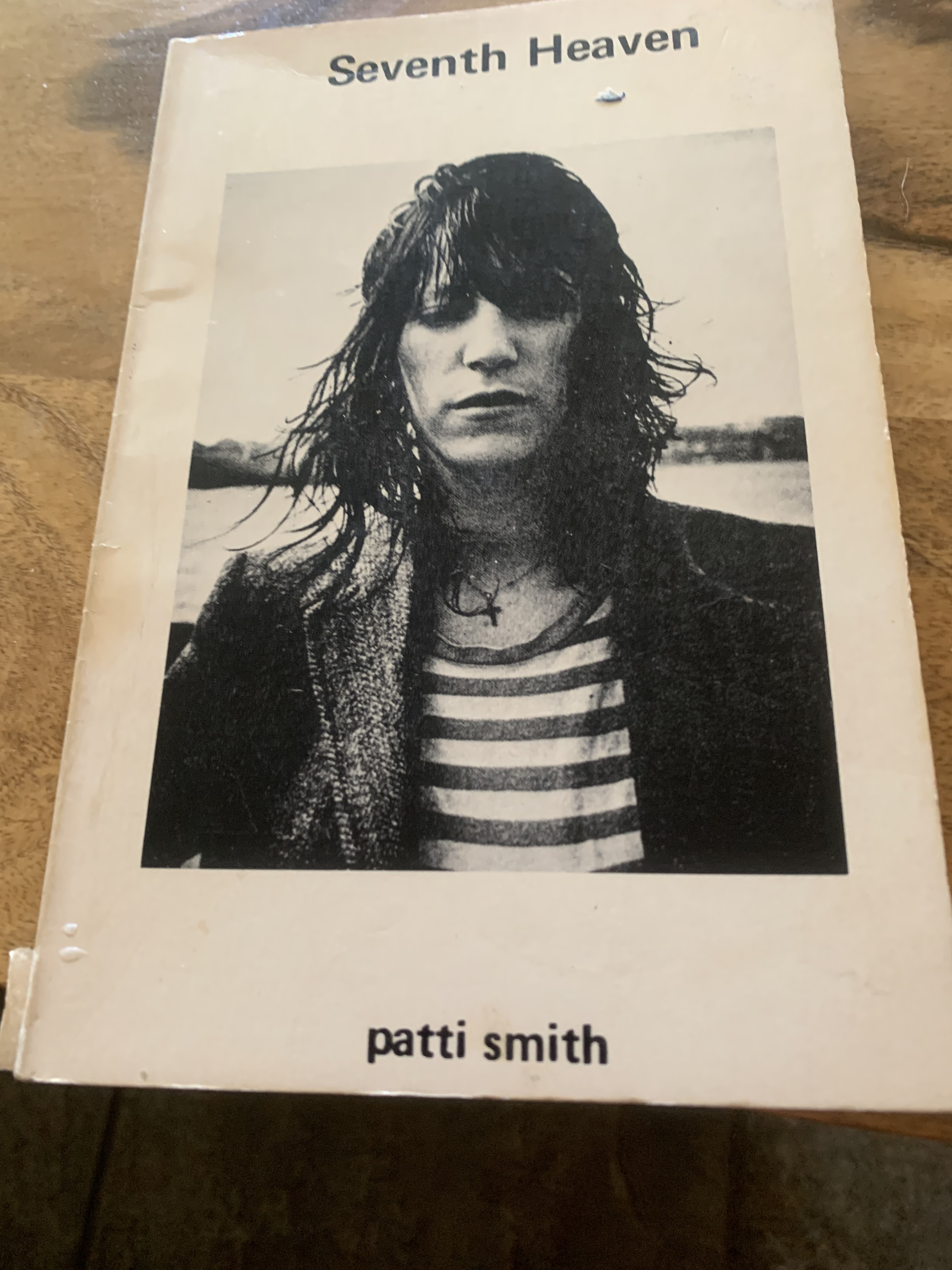
I re-read “Seventh Heaven” by Patti Smith last night. Around Christmas of 1977, I was participating in a UIL speech tournament at Austin High School. There are a number of stories connected to this trip, none of which have to do with the topic at hand: “Seventh Heaven” by Patti Smith. I had both of Patti Smith’s albums at the time: Horses, and Radio Ethiopia. I was enamored of her and the very different aesthetic she projected into my 16-year- old mind. While on a break from the speech tournament, we went to an independent book store near UT, Grok Books. There in the poetry section (one that was not like the poetry offerings in Victoria, Texas), I found a book of poetry by Patti Smith. It cost $2.95. What a deal. I remember reading it in the cafeteria/auditorium of Austin High School as we waited to see if we had placed in Duet Acting. One of the girls on the trip asked to see what I was reading. She read the poem “Fantasy,” quickly handed it back to me with a look of confused distaste. “You like this?” I had to admit— I did. Still do. More so, I think, for the nostalgia of it all, than for the poetry itself. But as Roger Shattuck wrote: we spend a lifetime reading and studying poetry in an attempt to understand, and then try to read it once again with an innocent eye. Can’t really do that.
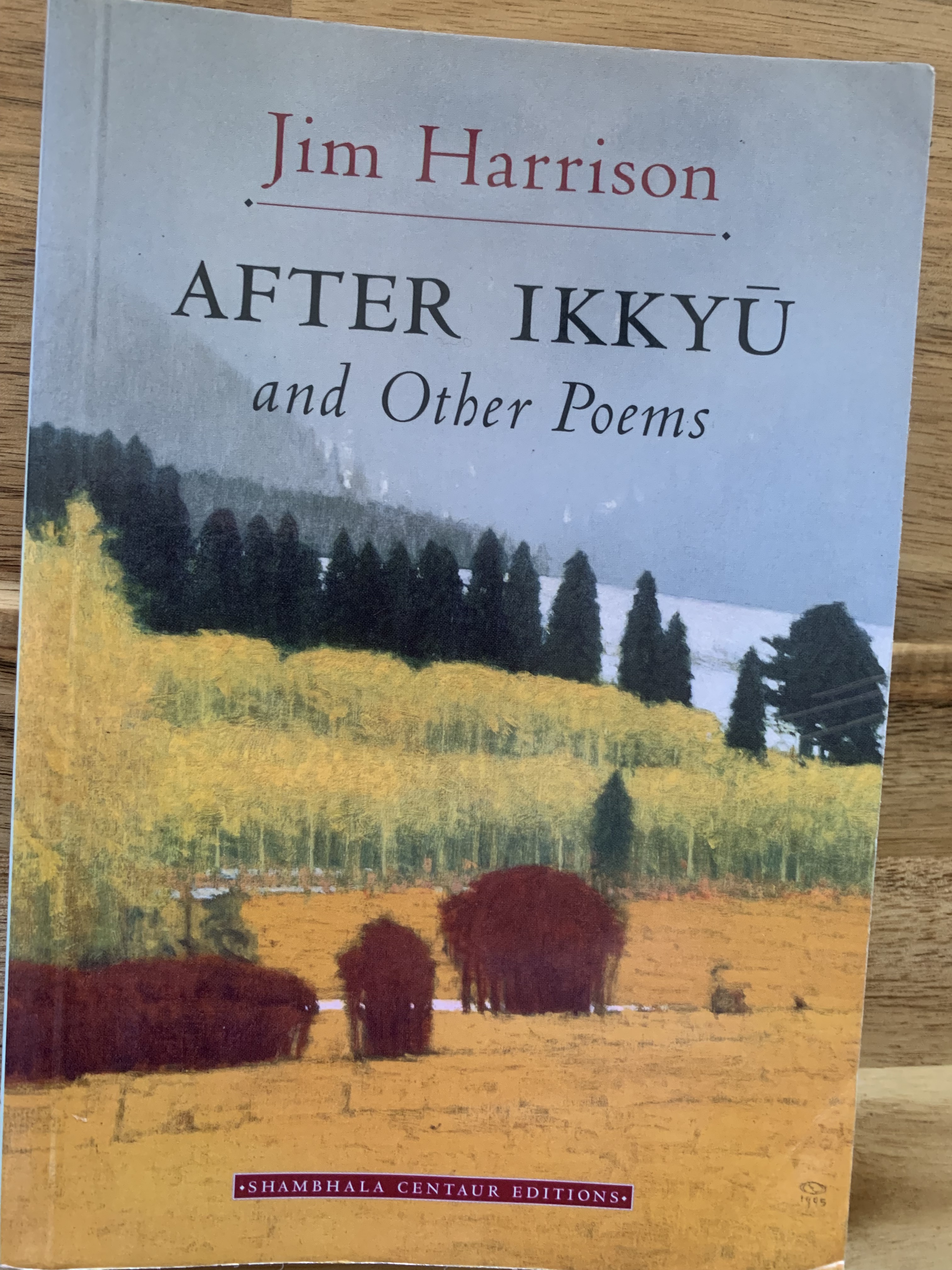
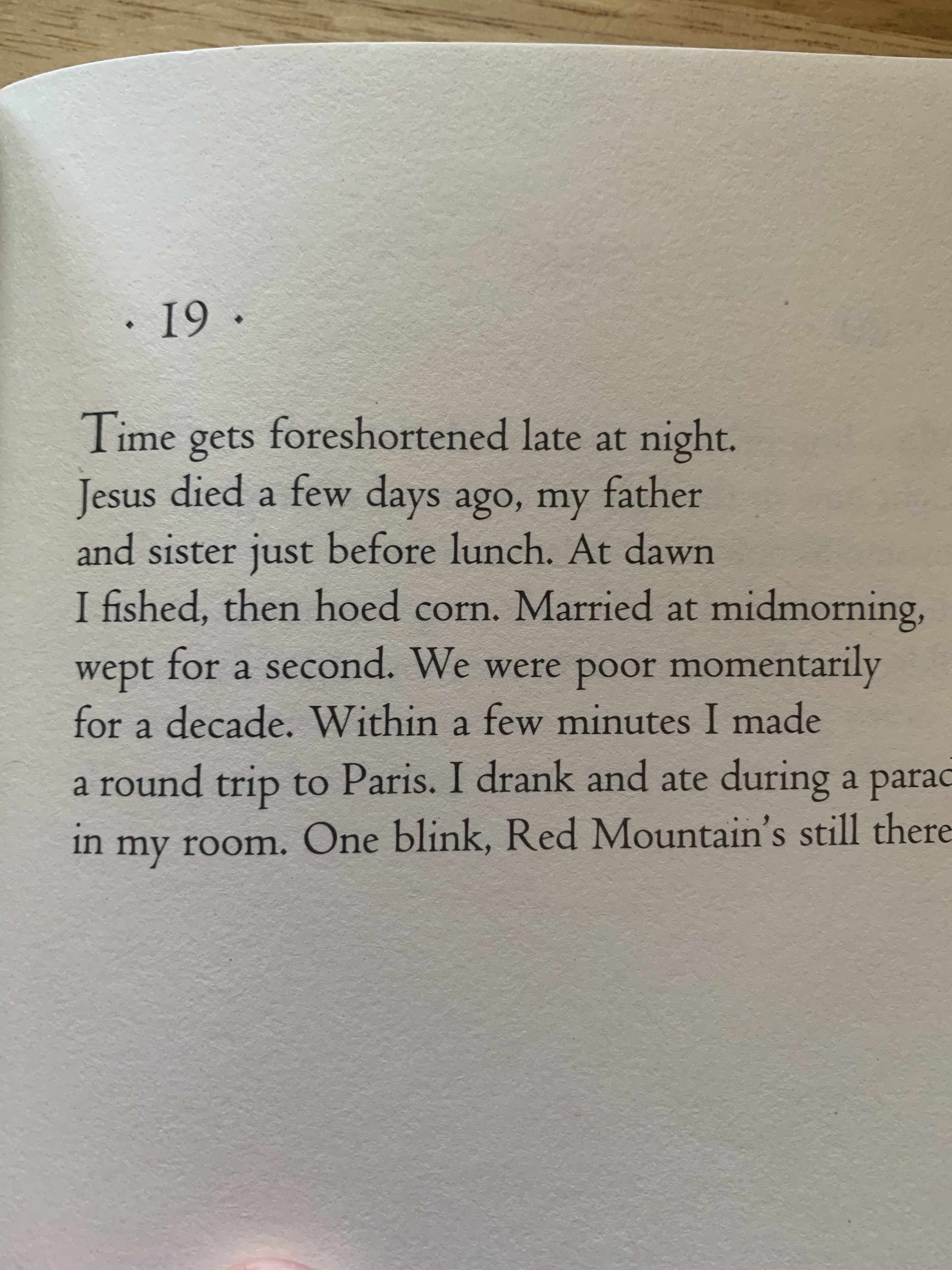
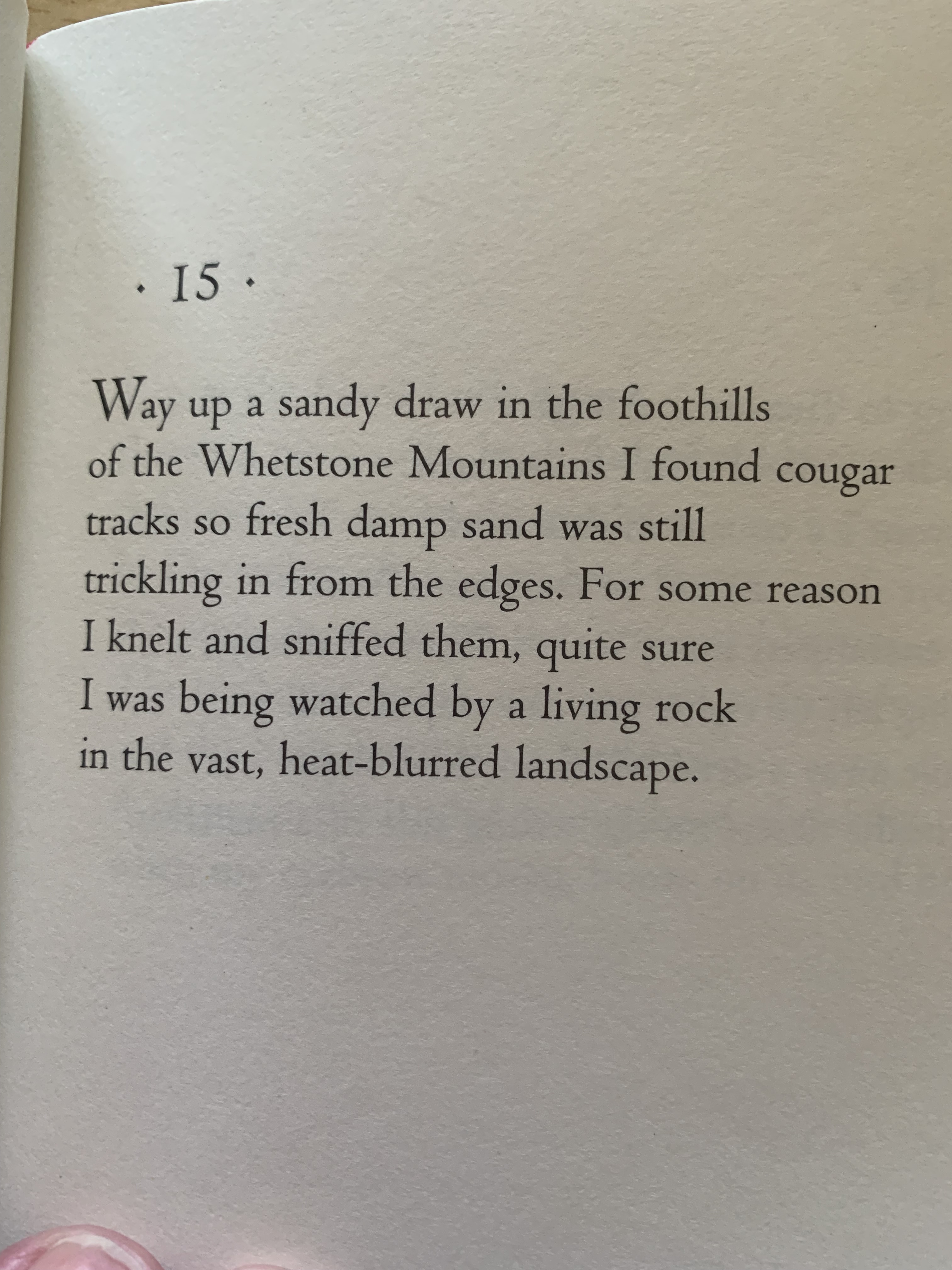
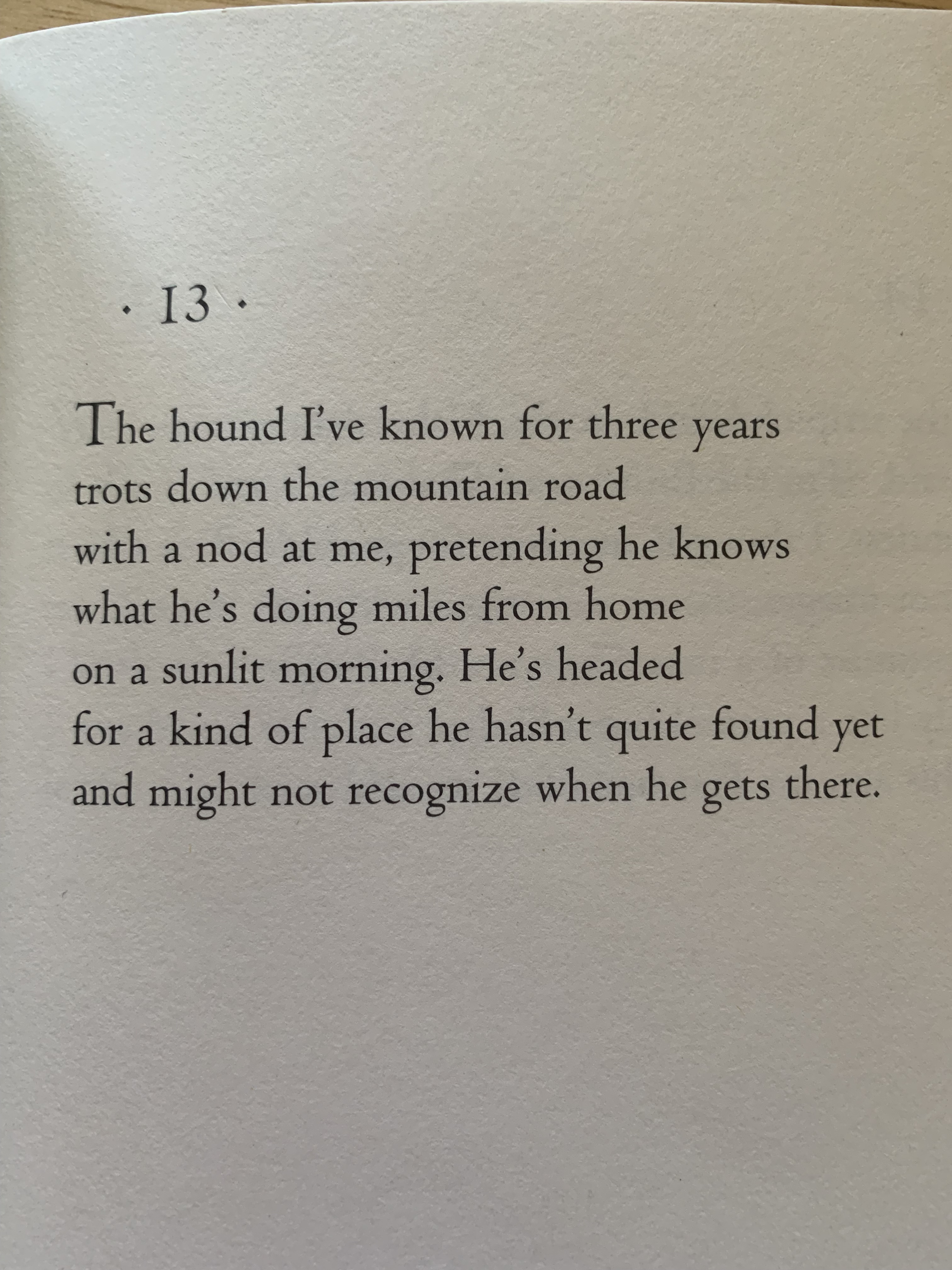
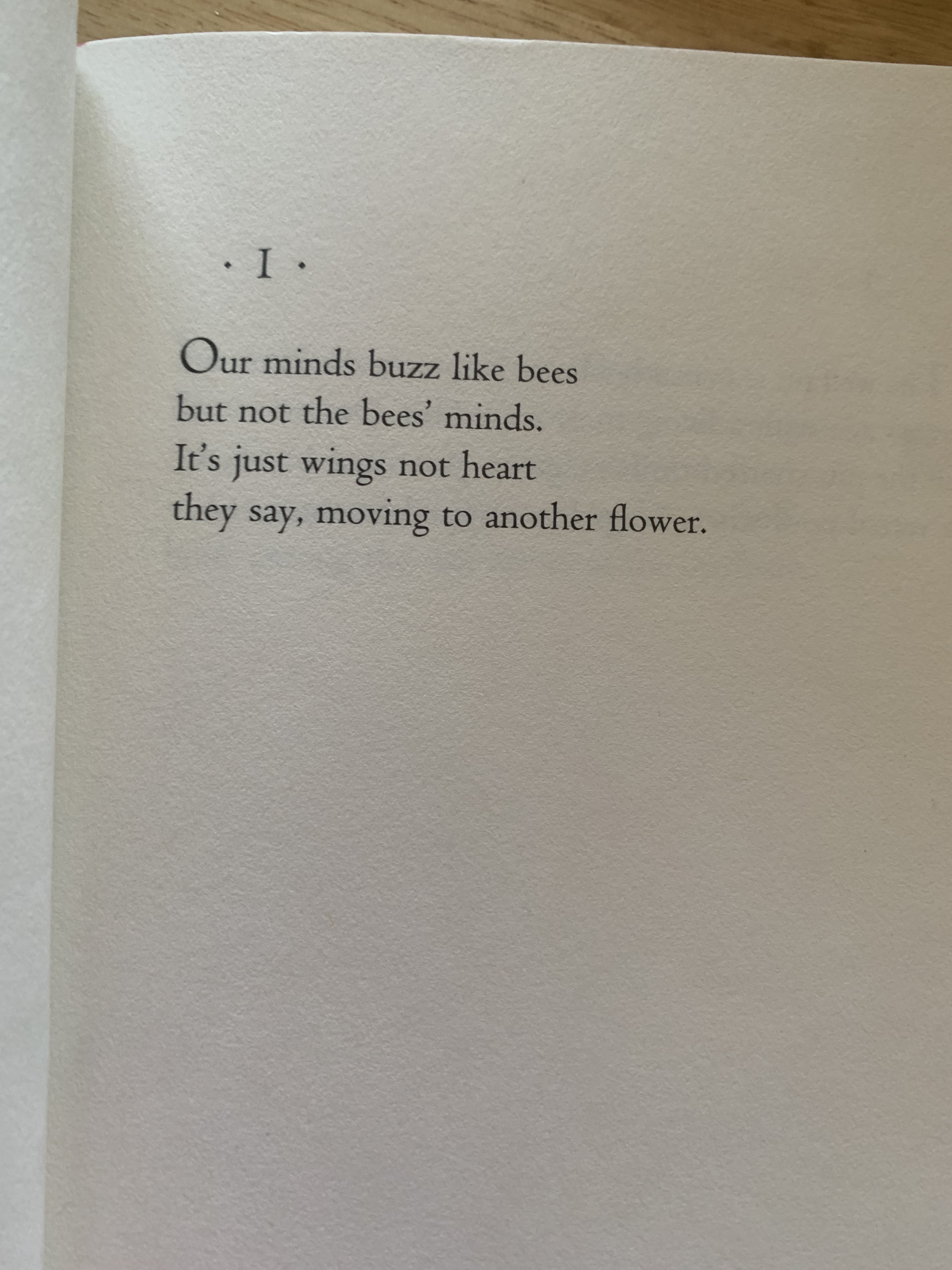
I read “After Ikkyu” by Jim Harrison again last night. Over the last 30 years I must have read this book 30-40 times all the way through (It is short), and then countless other times dipped into it for psychic and spiritual relief. After Ikkyu was another book I stumbled across at a Half-Price books. I had never heard of Jim Harrison, and had never heard of Ikkyu, so that day I pulled After Ikkyu off the shelf was an important date in my poetic literacy. Harrison over the next few months quickly became my favorite poet and novelist. I even read his memoir, and collection of essays written for foodie magazines. The poems in After Ikkyu are modeled after the Japanese poet Ikkyu. They are brief observations about the fleeting nature of life, and our constant inability to see the beauty right in front of us. The poems are imagisticly clean, and delivered with a wry sense of humor. Every time I read them I am stunned by their beauty, craftsmanship, wisdom and wit.
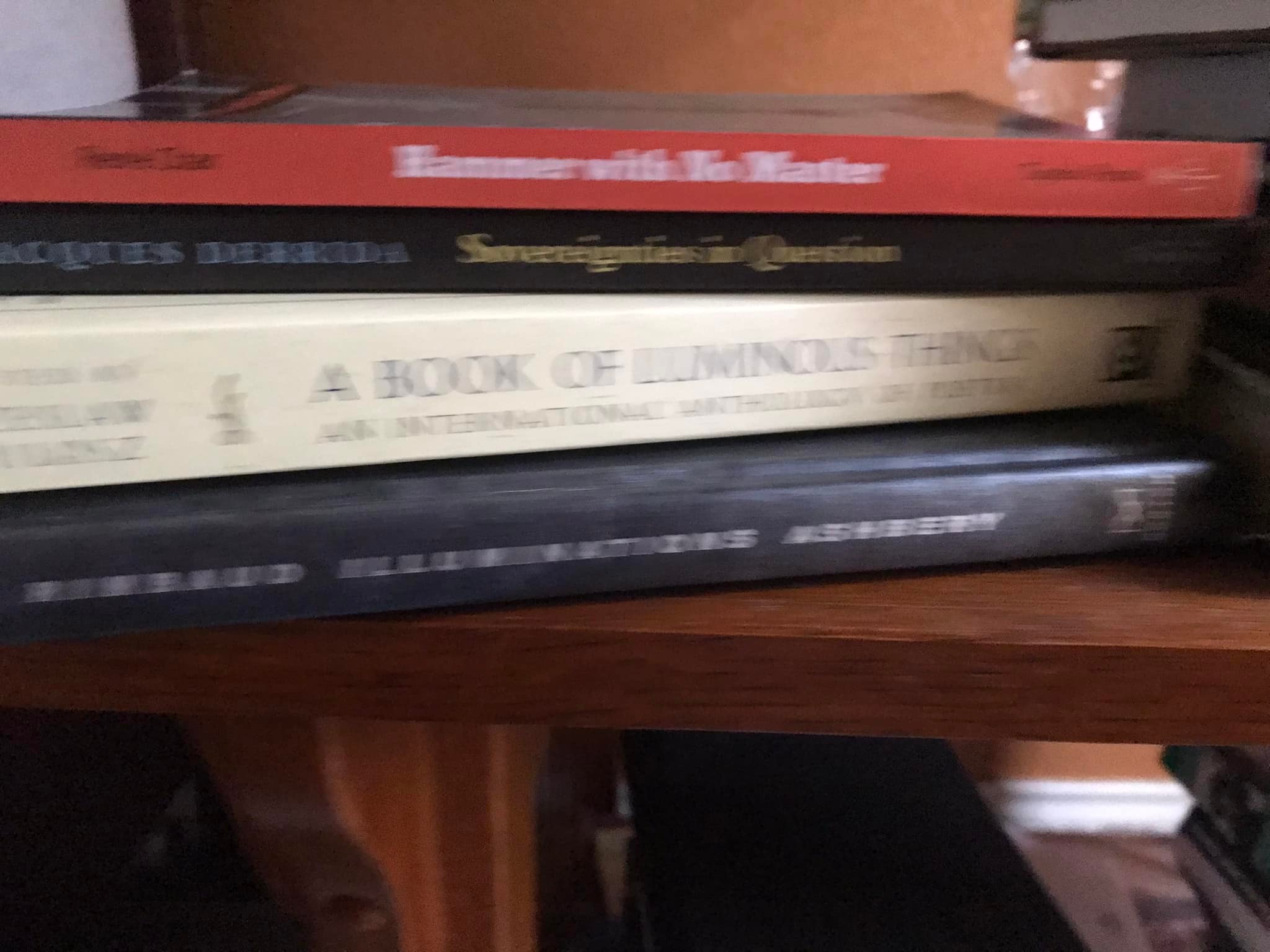
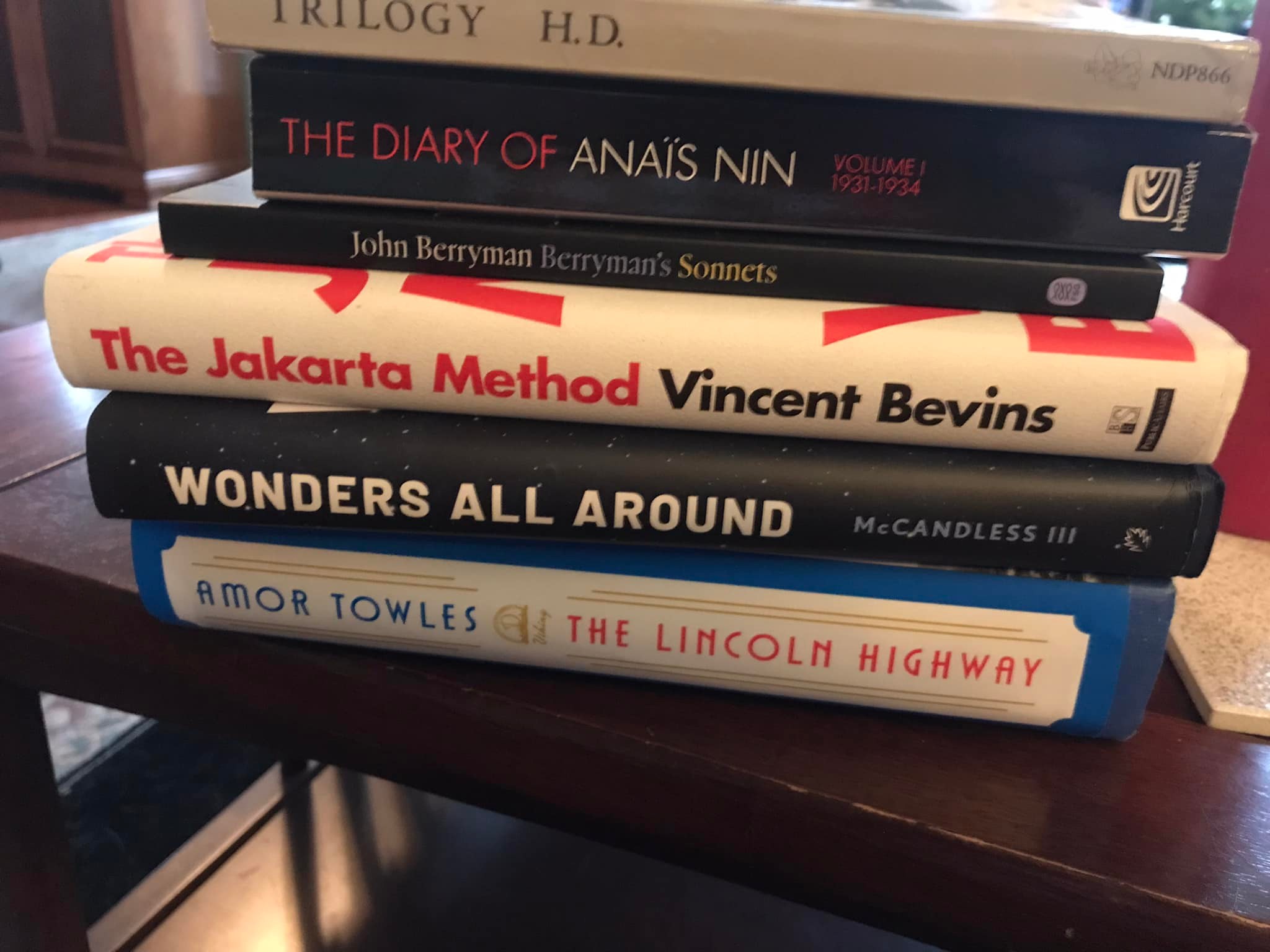
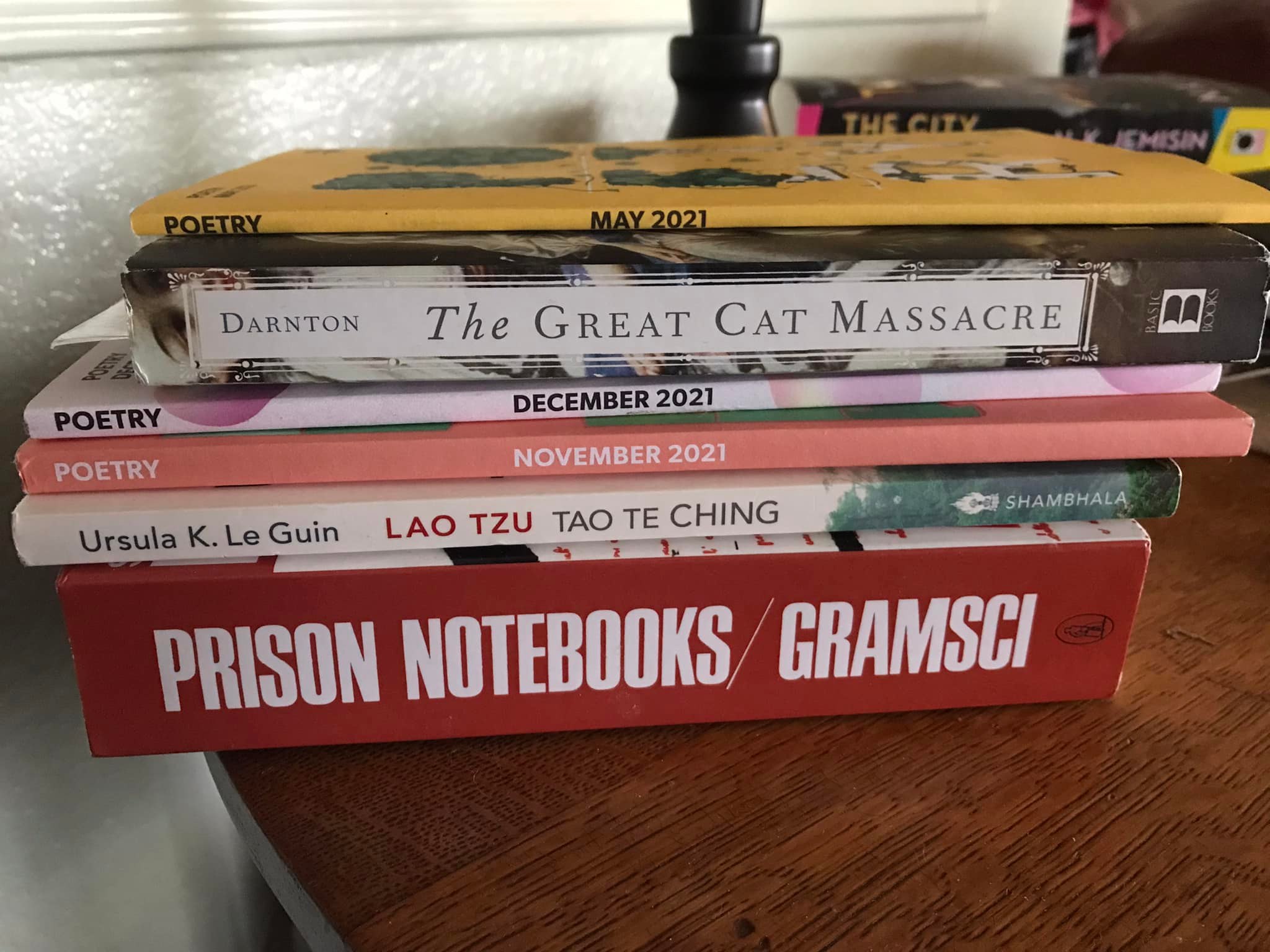
I have seen a couple of people post what they read this year. So, being the follower that I am, I decided to post my list. I read constantly, some books I have been reading for years, and have never finished, but am still reading off and on. Some books I stop reading for various reasons: I lose interest, I lose the book in the house somewhere, the book gets shelved, I get bored, I know where it is going, the writing is just too pathetic to continue. Here is the list of books I finished (from beginning to end) this year. I stress finished, because this is not a complete list of what I have been reading. The pictures are current book piles around the house I am reading from.
Fantasyland—Kurt Anderson
Bestiary—Guillaume Apollinaire
Educated—Tara Westover
The Historians (twice)—Eavan Boland
Poetry as Insurgent Art— Ferlinghetti
Interior Chinatown by Charles Yu
At the Existentialist Cafe—-Sarah Blakewell
An Indigenous People’s’ History of the United States by Roxanne Dunbar-Ortiz
Under the Dome: walks with Paul Celan by Jean Daive
Norma Jean Baker of Troy by Anne Carson
The selected poems of Wendell Berry
Living Nations, Living Words edited and selected by Joy Harjo
An Unnecessary Woman—Rabid alameddine
Selected Poems of Guiseppe Ungaretti
Jimmy’s Blues by James Baldwin (selected poems)
How to be Antiracist by Ibram X. Kendi
Stone Lyre, poems by Rene Char
An Oresteia (Aiskhylos, Sophocles, Euripides) translated by Anne Carson
Self-Portrait in a Convex Mirror by John Ashbery
Waiting for the Barbarians by J.M. Coetzee
Sing Unburied Sing by Jesmyn Ward
First Person Singular by Haruki Murakami
The Buried Giant by Kazuo Ishiguro
Finna by Nate Marshall (twice)
Debths by Susan Howe
Dark City by Charles Bernstein
The Essential Jim Harrison, by Jim Harrison
Four Hundred Souls by Ibram X Kendi and Keisha N Blain
The Big Seven by Jim Harrison
Goldenrod by Maggie Smith
Life on Mars by Tracy K. Smith
Glottal Stop by Paul Celan
Asylum by Jill Bialosky
The Pill Versus the Springhill Mine Disaster by Richard Brautigan