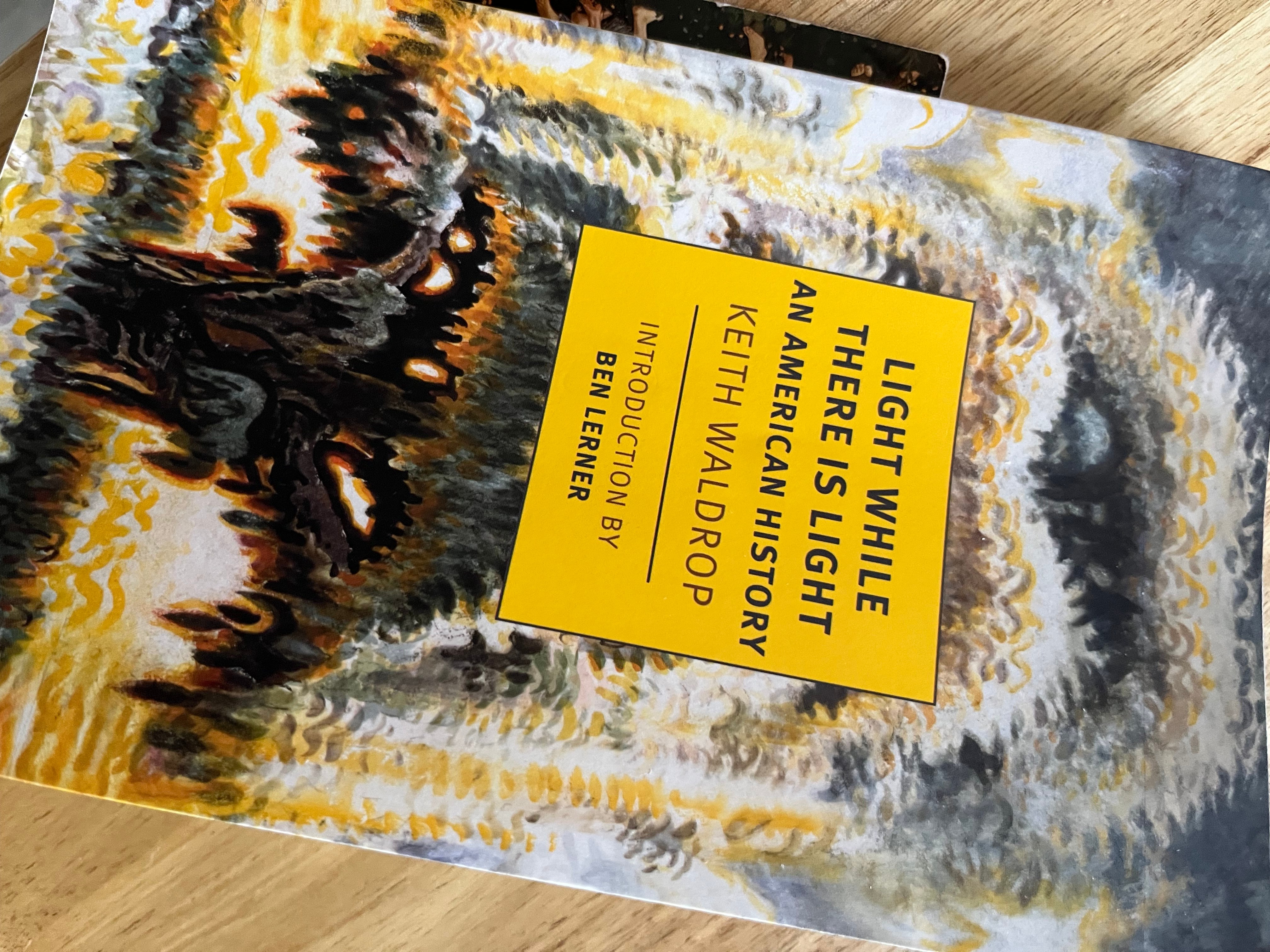
I finished “Light While There is Light: an American History” by Keith Waldrop today. It is the RFB selection for September. It was my turn to choose. I am not sure what to think. I finished it mainly because it was my pick. It took longer than it should have being only 200 pages, but it certainly did not call to me to finish. Although one of our group said he read it in two days, and couldn’t put it down. Waldrop is a contemporary poet, winner of the National Book Award for Poetry, connected to the LANGUAGE poets. I have read more than a little of his poetry. So when I ran across this book, published by The New York Review of Books I thought it would be an easy pick. But I am not sure what to think. It reminds me of Educated (which I loved for its naive sense of self and modesty), and “Hillbilly Elegy” which I despised for its self serving propaganda. Waldrop’s book, like these two, is about growing up in a poor and religious fundamentalist family in modern America, and the difficulties of shaking off those aspects of American life in order to live your own life. While I found interesting ideas, and sentences throughout the entire book—“But I did not know, all the terms of my knowing in process of becoming meaningless.” and then when talking about speaking in tongues at church and revivals—“the only voices I ever found in me now were parodies” The part of the book I enjoyed the most were the last 50 or so pages when he talks about his family’s fascination with the Ouija board, and other aspects of spirituality each of the family members pursue as they moved into adulthood. Over all I think, I should have read the whole book as fast as I read the last 50 pages. It might have cohered better that way.
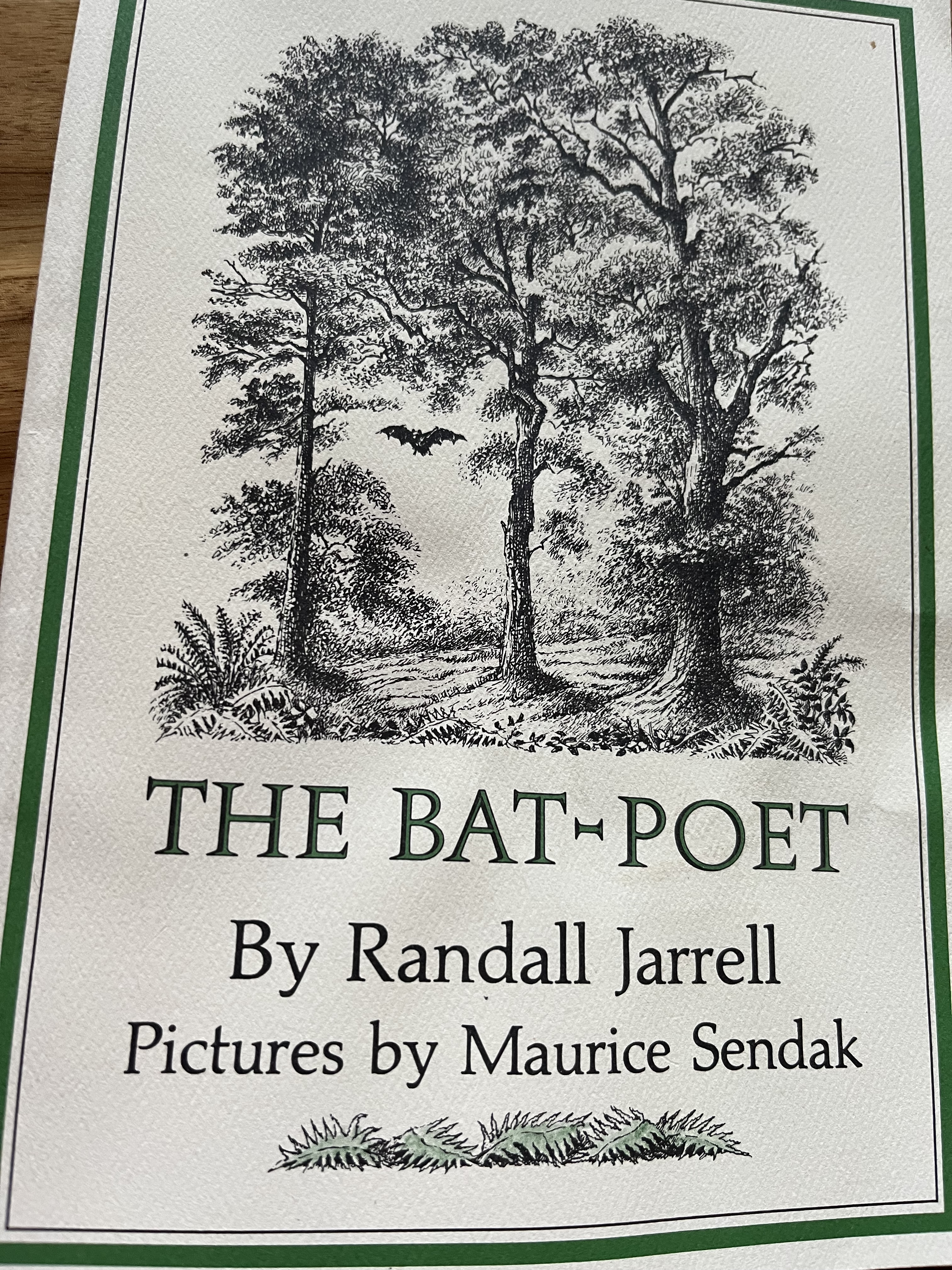
I re-read Randall Jarrell’s The Bat Poet late this afternoon (It is short, 36 pages so don’t be too impressed). I first read The Bat Poet as part of The Hill Country Writing Project (the precursor to the Heart of Texas Writing Project) in 1987. It is such a lovely book about becoming a writer. Lots of analogies between the narrative of the bat and the stages newbie writer’s go through on their journey to being a poet—1) seeing a world different than your peers; 2) finding a mentor (text); 3) writing your first poems 4) mimicking others’ voices 5) finding your voice in your identity; 6) returning to your community with your vision: a mini-hero’s journey! I love the scene between the bat and the mockingbird (the accomplished poet no one understands) when the bat reads a poem he wrote about the owl to the mockingbird. The mockingbird explains the technical aspects of the poem he liked, befuddling the bat who just wrote the poem like the owl was oblivious to the academic names for what he was doing. The illustrations by Maurice Sendak for the book are a bonus.
“So many of us use when at our craft/of transmuting our life into words.//The essence is always lost.”
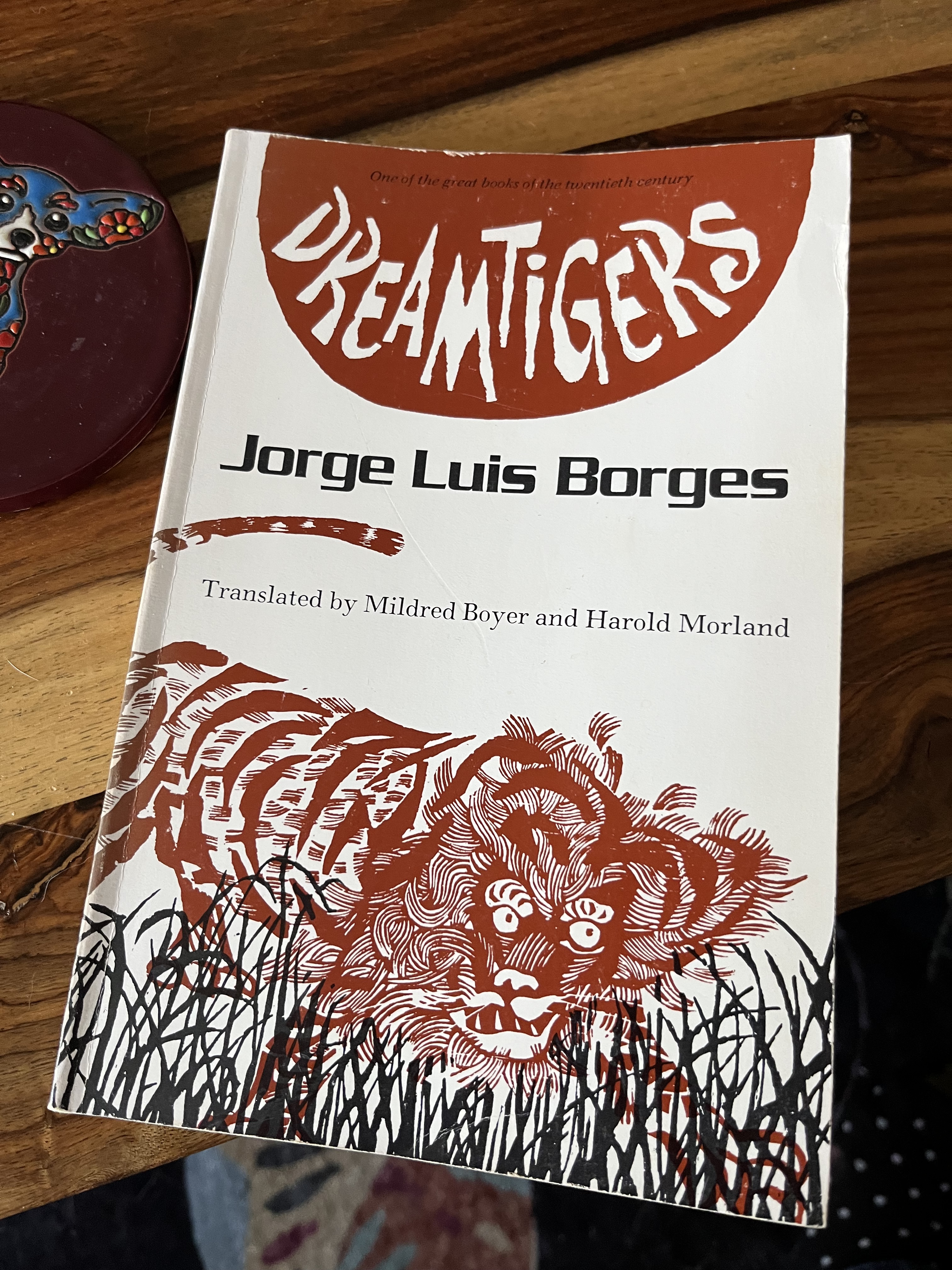
I have read three other books by Borges over the years: Labyrinths, The Book of Sand, and Ficciones. They have all been thought provoking and strange. I first heard of Borges as a fictional character in Umberto Eco’s “The Name of the Rose,” which makes sense as I finished “Dreamtigers” this afternoon. In “Dreamtigers” one of the themes Borges causes the reader to think about is identity. Specifically who is the real “Borges” (and us by extension) the one created by us that we present to the world as us, or the one that created the presentation. “Dreamtigers” is divided into two sections. The first comprised of parable-like reflections revolving around themes of memory, identity, creativity, and mirrors. The second section made up of poems, which touch upon similar themes and images. One of the ideas that have lingered with me after finishing the book is the thought that our unique experience of life which each of us possess and create though our life…vanishes as we die. “Events far-reaching envoy to people all space, whose end is nonetheless tolled when one man dies, may cause us wonder. But something, or an infinite number of things, dies in every death, unless the universe is possessed of a memory, as the theosophists have supposed.” I know that this is obvious, but also profound. Nietzsche said that in the end we only experience ourselves. And Borges extends this with the thought that this individual experience dies with the life of the person. Unless as he says, the universe possess a memory. And even then, that memory is changed and erased by the future which remembers us in their own individual experiences. “There is not a single thing on earth that oblivion does not erase or memory change, and when no one knows into what images he himself will be transmuted by the future.”
Today I finished (for RFB) Storyteller by Leslie Marmon Silko. It reminded me of Way to Rainy Mountain by N. Scott Momaday in the way it blended personal narratives, with native-American stories, and history. The three aspects being, in reality, inseparable. In the case of Storyteller, the stories, poetry, photographs orbit around each other to create the idea of “story” as what defines us in our lives: the past, present, mythic all combine to create the culture we live in as well as the individual person who lives inside of the culture. It is a fairly subtle nuanced book. Silko does not spell it all out in the way Thomas King does in “The Truth About Stories,” a book I finished a few weeks ago. King also blends personal narrative, with myth, and history. Instead, Silko, lays out the parts of her collection in a type of collage, where the various parts generate a collective power creating a larger whole from the smaller parts.
Here are just some lines I underlined as I read:
“But sometimes what we call “memory” and what we call “imagination” are not so easily distinguished.”
“The story was the important thing and little changes here and there were really part of the story. There were even stories about the different versions of stories and how they imagined these differing versions came to be.”
“We were all laughing now, and we felt good saying things like this. “Anybody can act violently—-there is nothing to it; but not every person is able to destroy his enemy with words.”
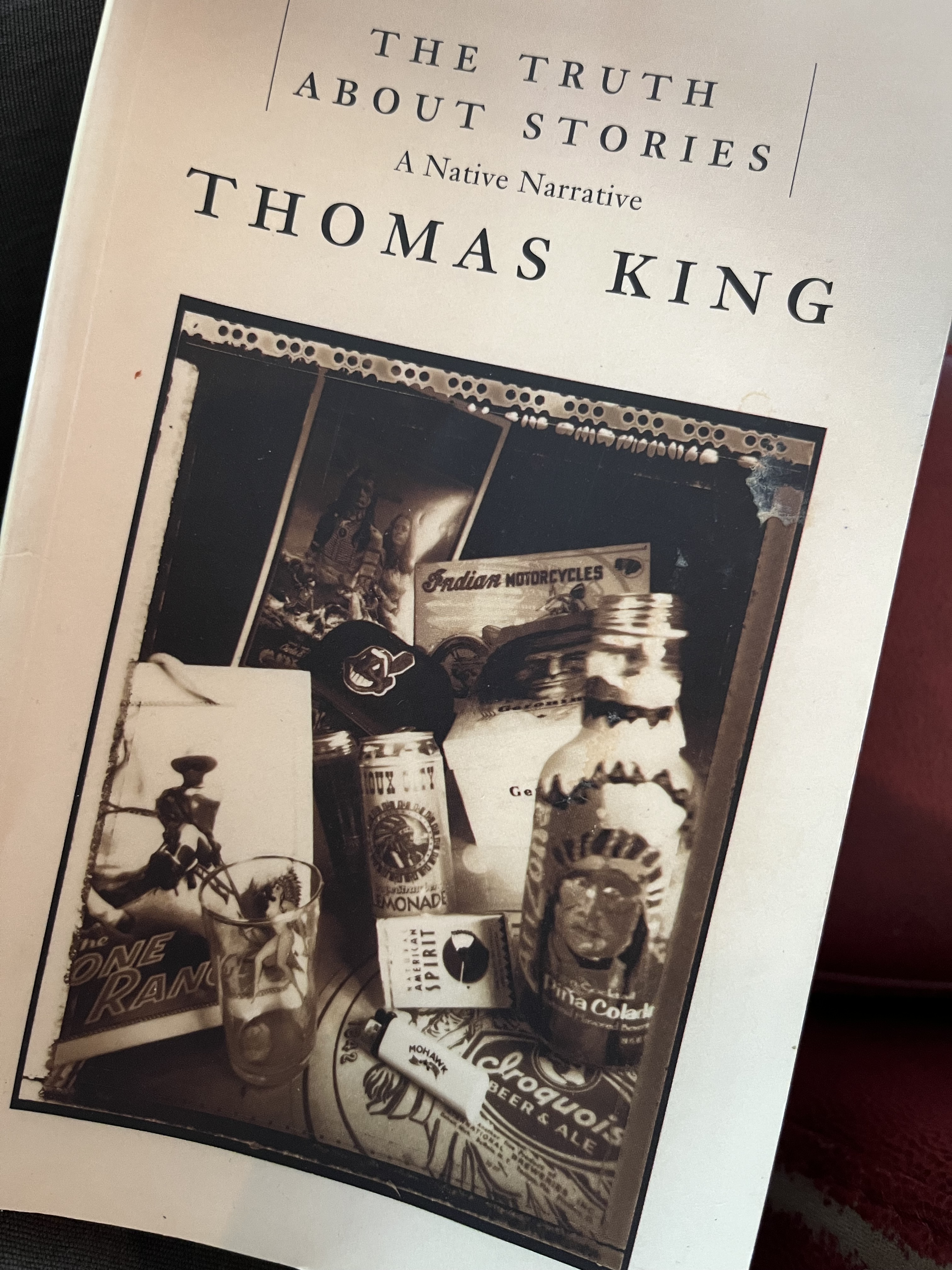
This is the second, maybe third, time I have read this book. It is that good. Oscar Wilde wrote that a book that isn’t worth reading twice is not worth reading once. The Truth about stories is worth reading once, maybe even three times. “The truth about stories is that is all that we are.” King repeats throughout the book as he tells stories within stories, mixing personal narrative with native “myth” and historical facts to illustrate, expand and deepen each section/chapter of his book. His themes are identity, how we become who we think we are, how we can change who we think we are; How others come to define us through the stories they tell about ourselves and themselves; and that we can change our world by changing the stories we tell each other. King is an indigenous Canadian. He focuses early on in the book about how one is an Indian, and how a large part of that definition is provided by the non-indigenous, from how one is supposed to dress to be seen as authentic, to convoluted arcane laws developed by the government in their attempts to control and eventually eliminate the Indian. He has a wonderful light touch in his writing style that makes an otherwise grim tale less horrific without sounding paternalistic. King begins each chapter with the story of the world carried on the back of a turtle, which is carried on another turtle ad infinitum. I assume to point out that there is never a sole basis for the story we live within. He ends each chapter in a similar way connecting the end to one of the stories from that chapter. Here is one of them: “Take it. It’s yours. Do with it what you will. Tell it to your children. Turn it into a play. Forget it. But don’t say in the years to come that you would have lived your life differently if only you had heard this story. You’ve heard it now.”
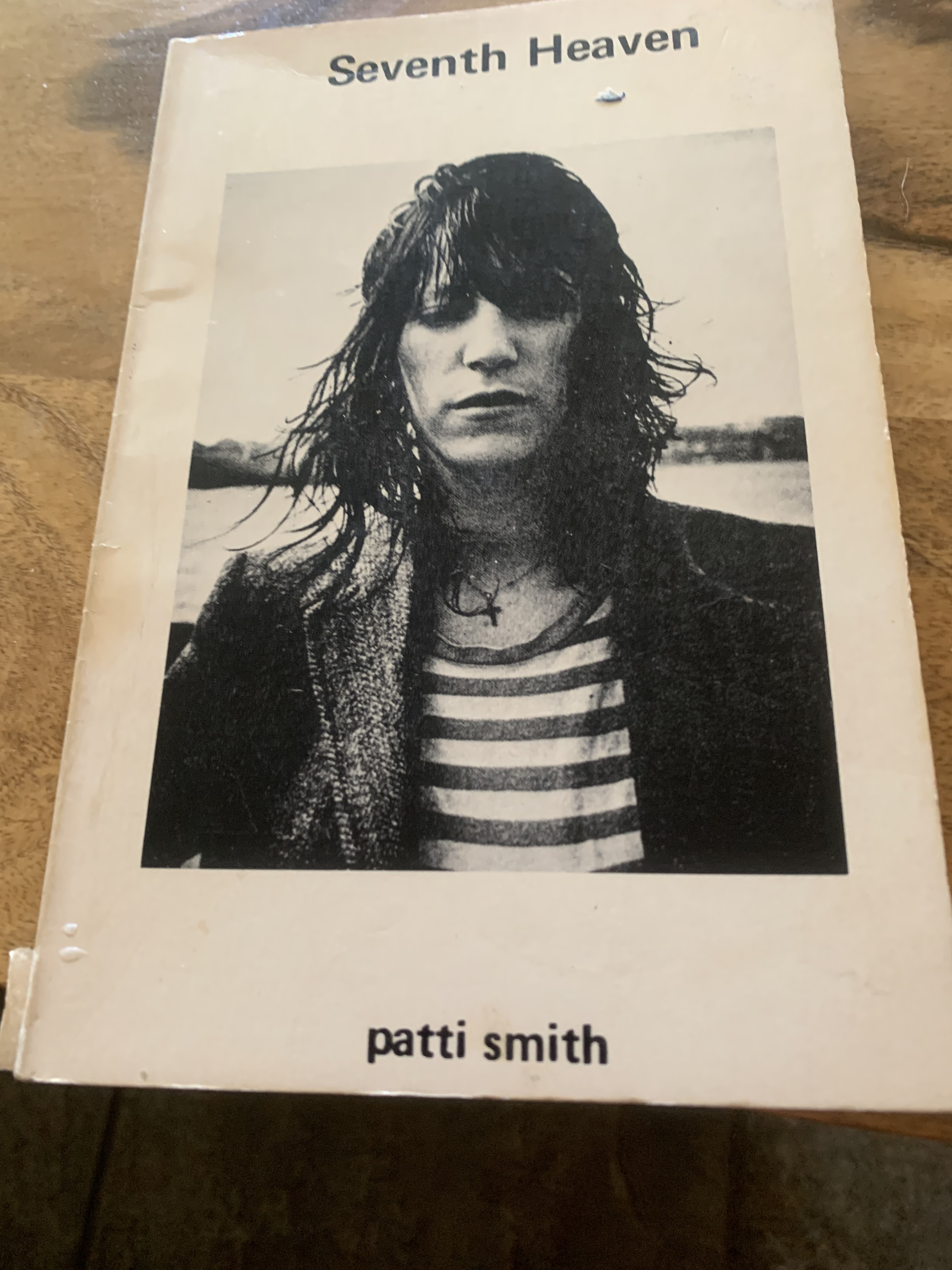
I re-read “Seventh Heaven” by Patti Smith last night. Around Christmas of 1977, I was participating in a UIL speech tournament at Austin High School. There are a number of stories connected to this trip, none of which have to do with the topic at hand: “Seventh Heaven” by Patti Smith. I had both of Patti Smith’s albums at the time: Horses, and Radio Ethiopia. I was enamored of her and the very different aesthetic she projected into my 16-year- old mind. While on a break from the speech tournament, we went to an independent book store near UT, Grok Books. There in the poetry section (one that was not like the poetry offerings in Victoria, Texas), I found a book of poetry by Patti Smith. It cost $2.95. What a deal. I remember reading it in the cafeteria/auditorium of Austin High School as we waited to see if we had placed in Duet Acting. One of the girls on the trip asked to see what I was reading. She read the poem “Fantasy,” quickly handed it back to me with a look of confused distaste. “You like this?” I had to admit— I did. Still do. More so, I think, for the nostalgia of it all, than for the poetry itself. But as Roger Shattuck wrote: we spend a lifetime reading and studying poetry in an attempt to understand, and then try to read it once again with an innocent eye. Can’t really do that.