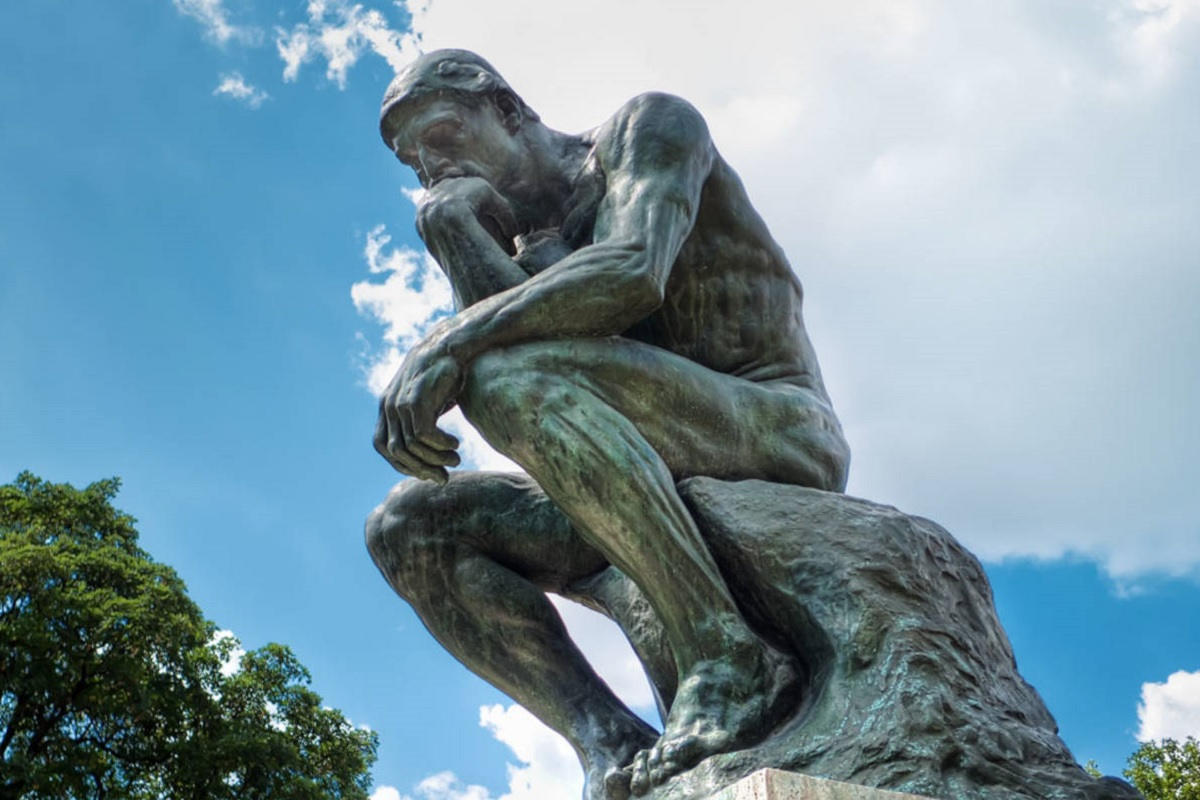
i don’t know
he says to himself
about nothing in particular
and then smiles
for he knows
for once he’s right
(February 25, 2026)
i don’t know
he says to himself
about nothing in particular
and then smiles
for he knows
for once he’s right
(February 25, 2026)

With a metaphor’s
soft fluidity,
one replaces
an other
granting grace
as a form
of explanation.
I breathe;
trees breathe.
Air flows
between
shadow and light.
One to one—
not quite,
but enough.
I mistrust the soul
as a concept
of consciousness.
Not as is said:
a soul with a body,
or a body with a soul,
but some sense
separate from sense,
a constant desire
to set markers,
like a small asterisk
in a dense text
to divert the eye
along the bottom
of the page
like a river
we must cross
to finally arrive home.
Except, all is water;
and, there are no bridges.
(July 27, 2025)
“Hold infinity in the palm of your hand
And eternity in an hour.”
—William Blake
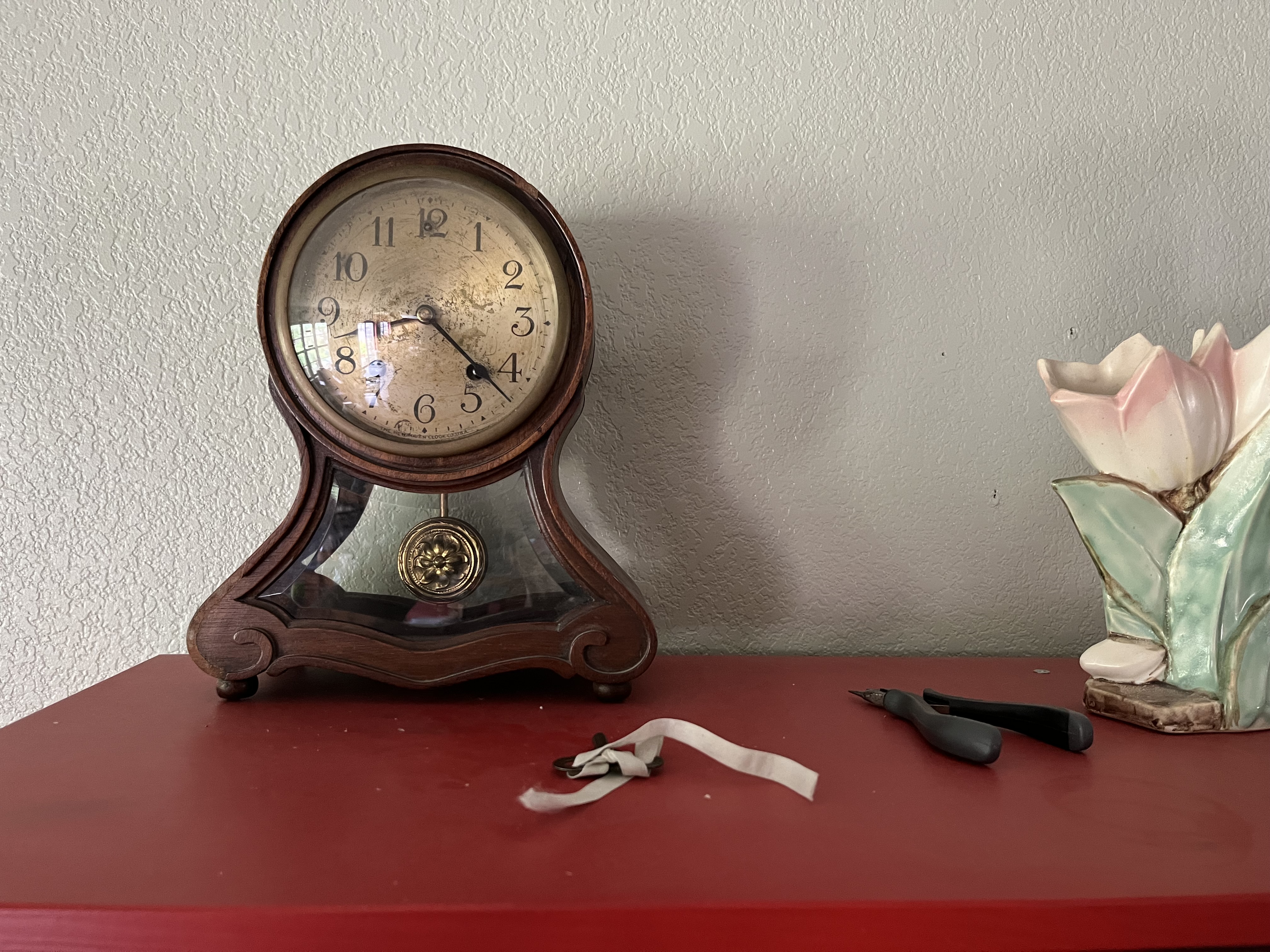
The cabinet clock has stopped again.
After following me through the house,
the chihuahua curls in my lap,
This morning, I’ve read some poetry,
talked to Lisa over a breakfast I made,
and folded laundry. Now, I take time
to think, and write this poem
as the dog sleeps contently nearby.
I think about winding the clock, then don’t.
(April 24, 2025)
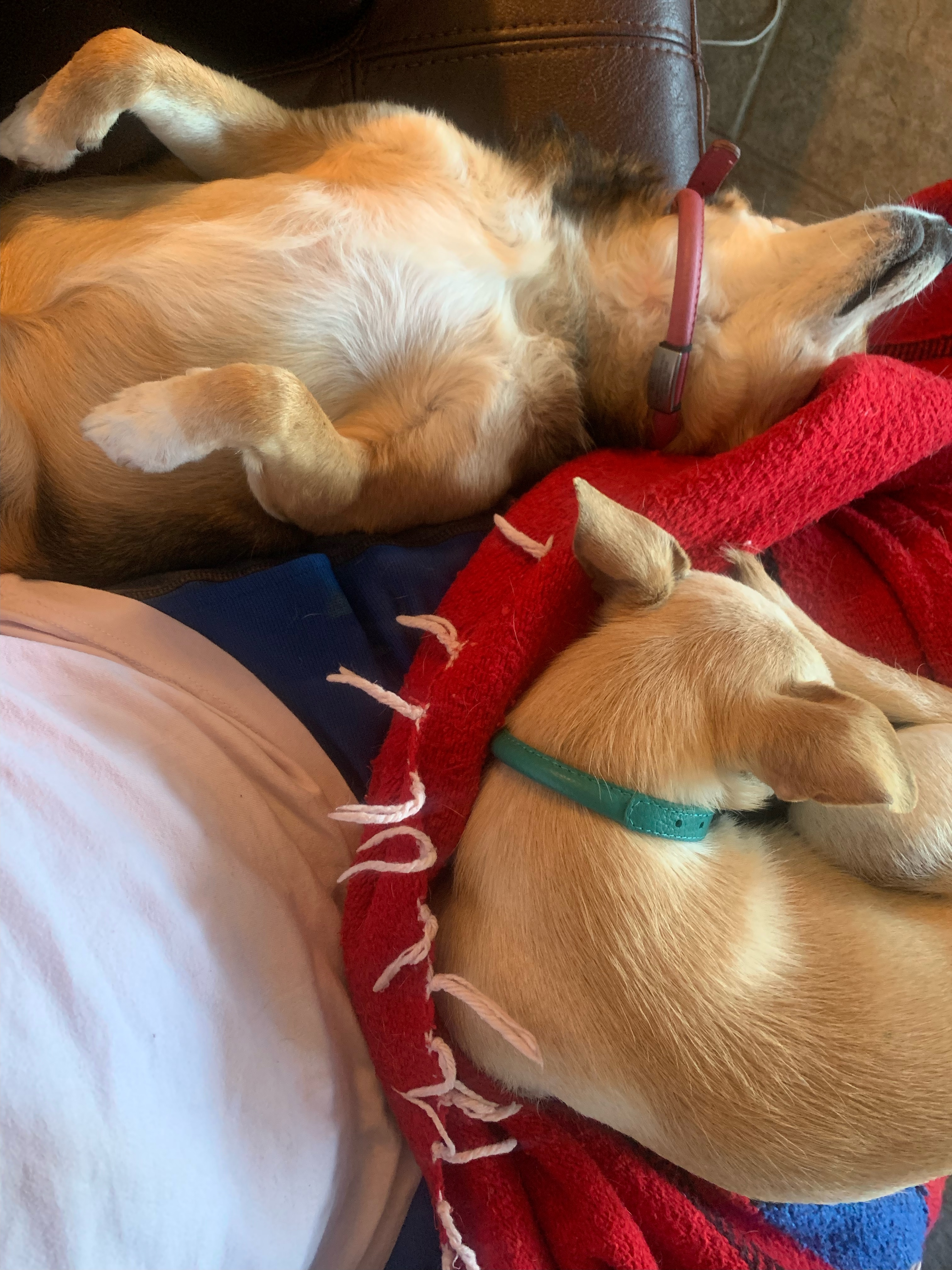
I wake. The puppy needs to go outside.
The older dog comes along as well
hoping to roust a nervous rabbit.
It’s close enough to six by this time
to feed them, and take my daily meds.
I am tired, and worried about the world.
They finish their ration of kibble
and head happily back up the stairs.
I turn off the light, and follow along.
In the hazy half-minute it takes
for me to crawl under the sheets,
they’ve both tightly curled in bed.
I lay there unable to return to sleep,
and listen to the dogs’ soft snores.
(April 4, 2025)

caught in the pulse
throb and gurgle
of our body’s
contained sloppishness
we find ourselves
always too late
as if a vast wave
loomed behind us
knowing the next second
so intently our ignorance
of where we are
consumes any awareness
thus cursed with inability
to be still, we breathe
(March 21, 2025)
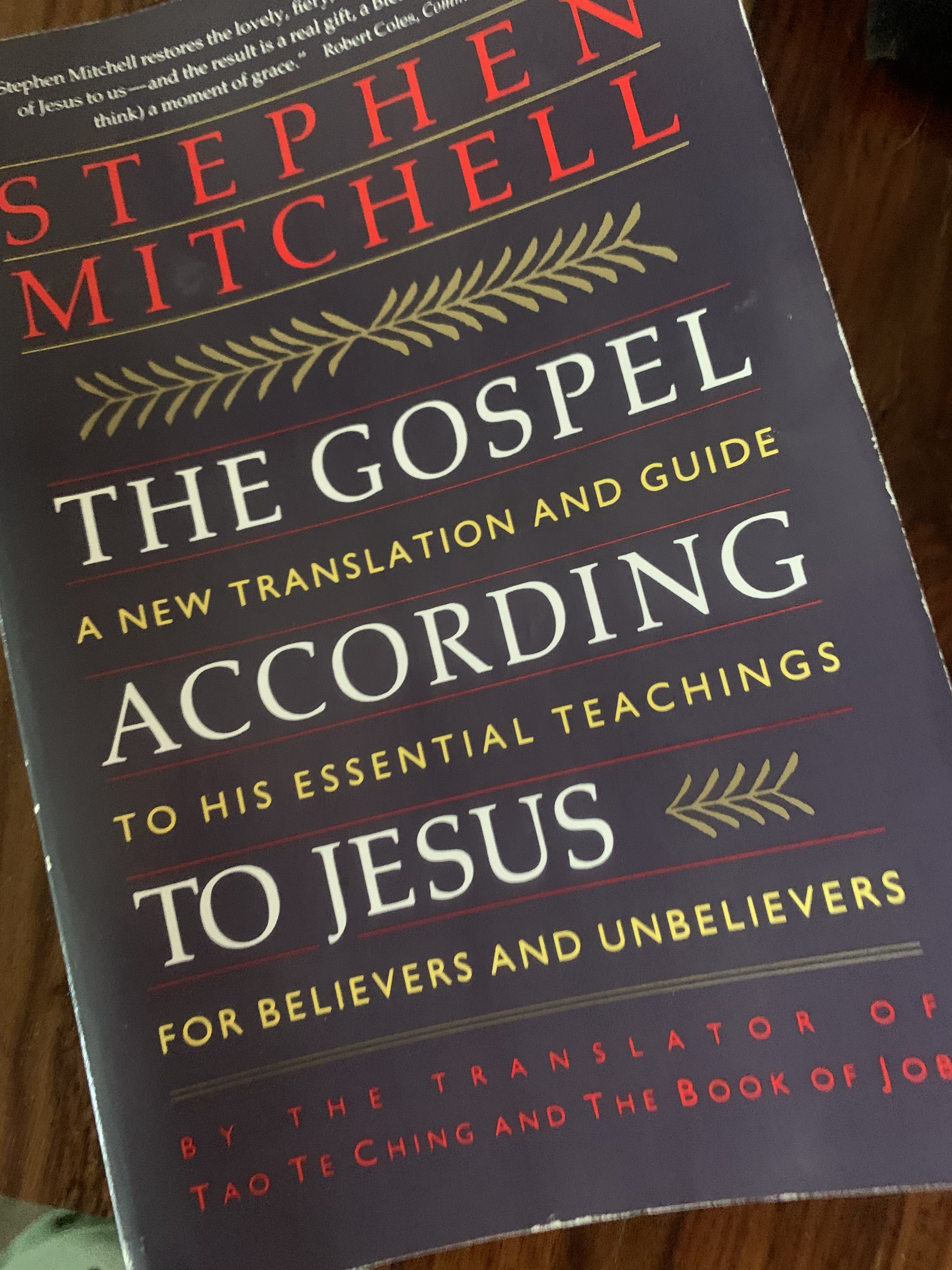
On the advice of a character from a Jim Harrison novel I was reading many years ago, I ordered two translations of Stephen Mitchell: The Book of Job, and The Gospel According to Jesus. I finally got around to reading one of them (one big advantage of retirement). Over the last couple of weeks I have read The Gospel According to Jesus. It was interesting and worthwhile. It opens with a lengthy introduction, followed by a translation of the parts of the gospels which in some versions would be the red-letter parts. After that section, Mitchell returns to the various parts thematically, accompanied with commentary. The commentary is a mixture of Mitchell, selections from Biblical scholars, and similar themes in philosophy (Buddhist, Taoist), and poetry (Blake, Rilke for example). As one of the blurbs on the back of the book says, “This approach succeeds brilliantly. Jesus, or at least Mitchell’s attractive portrait of him, leaps. into life and will fire the interest of believers and nonbelievers alike. (Harvey Cox)” And no, I have not abandoned my apostasy.
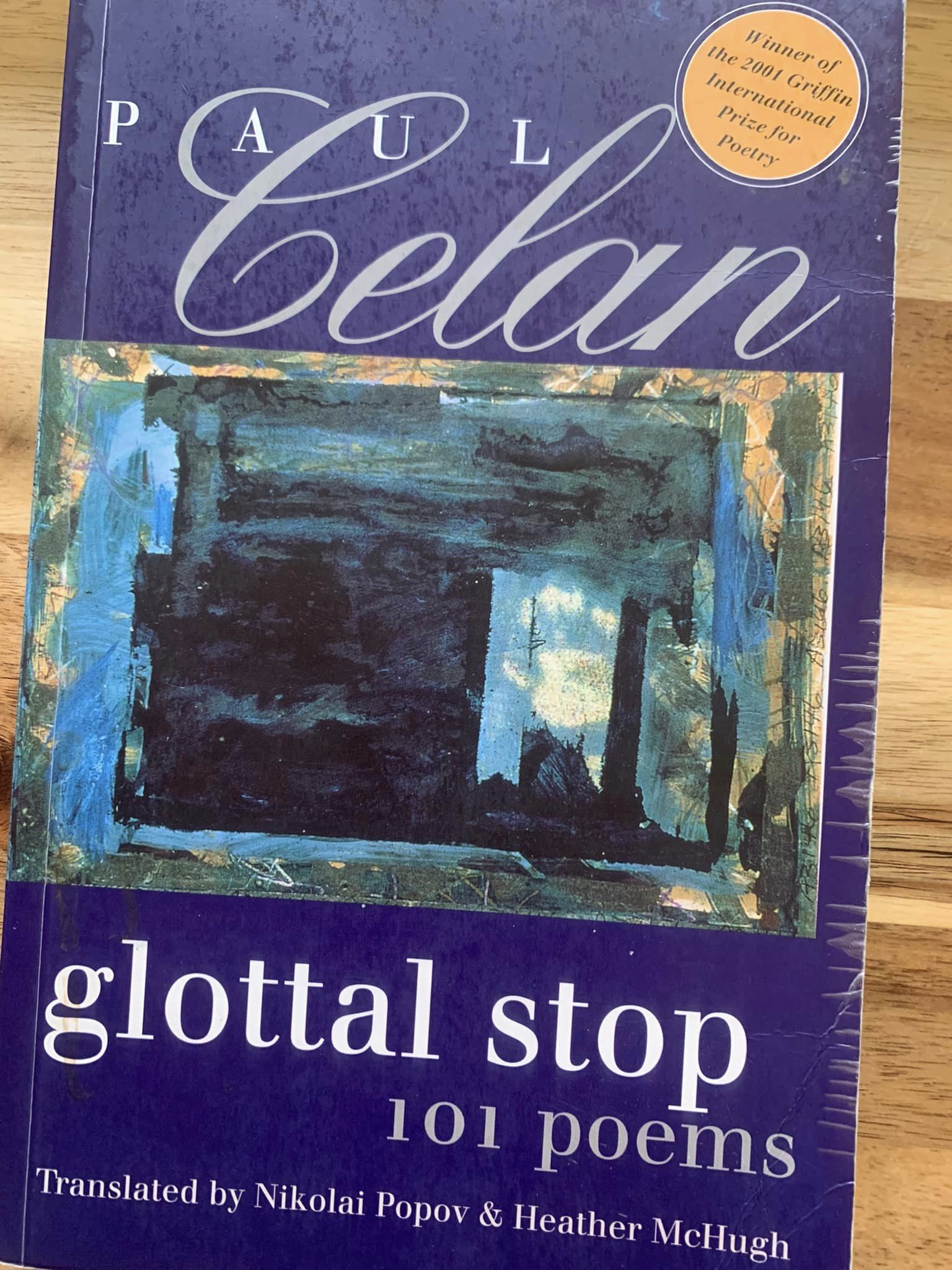
Paul Celan—glottal stop, translated by Nikolai Popov and Heather McHugh
I finished re-reading glottal stop, 101 poems by Paul Celan this morning. I cannot say with any honesty that I understand the majority of the poems. At most I see a handful as a totality, and then hints and short glimpses inside the others. (Despite the thirty pages of notes at the end of the volume). I have been reading at Celan for years now. There is always something there that intrigues me and causes me to return again and again, reading multiple translations and volumes of his work over the decades. I first came in contact with him through his poem “Death Fugue.” A horrifying and tragic poem coming out of his experience in the Nazi death camps. A poem I understand he refuted later in his life. But then, how much control does an artist have over their work’s reception once it is released into the world? I will, no doubt, return to him again. He is worth the effort.

I have always been slow, too slow to see
beyond the eddy to the sea, too slow
to piece together the mundane violence.
So many waves to obliviously
watch as they slowly wash away the shore;
my mind turns away from soft increments.
Each new thought is an act of violence
against reality, against stasis,
toward an affirmation of consciousness.
It’s easy to believe in permanence
when the present seems so solidly here,
while yesterday clings like drowning sailors
pulling me beneath the surface of time,
until my words are swallowed like small fish
to feed an oppressive leviathan.
(March 28, 2024)


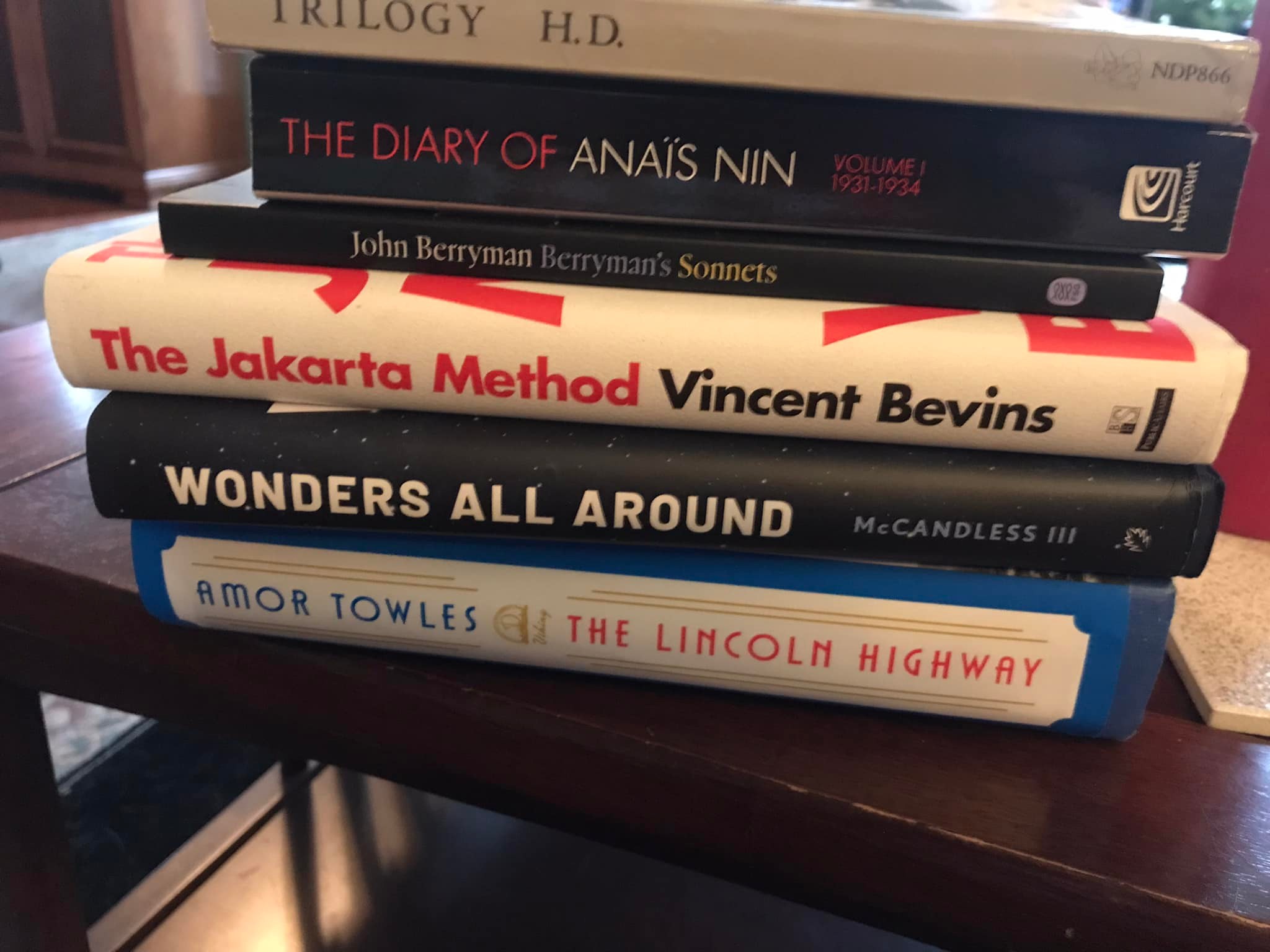
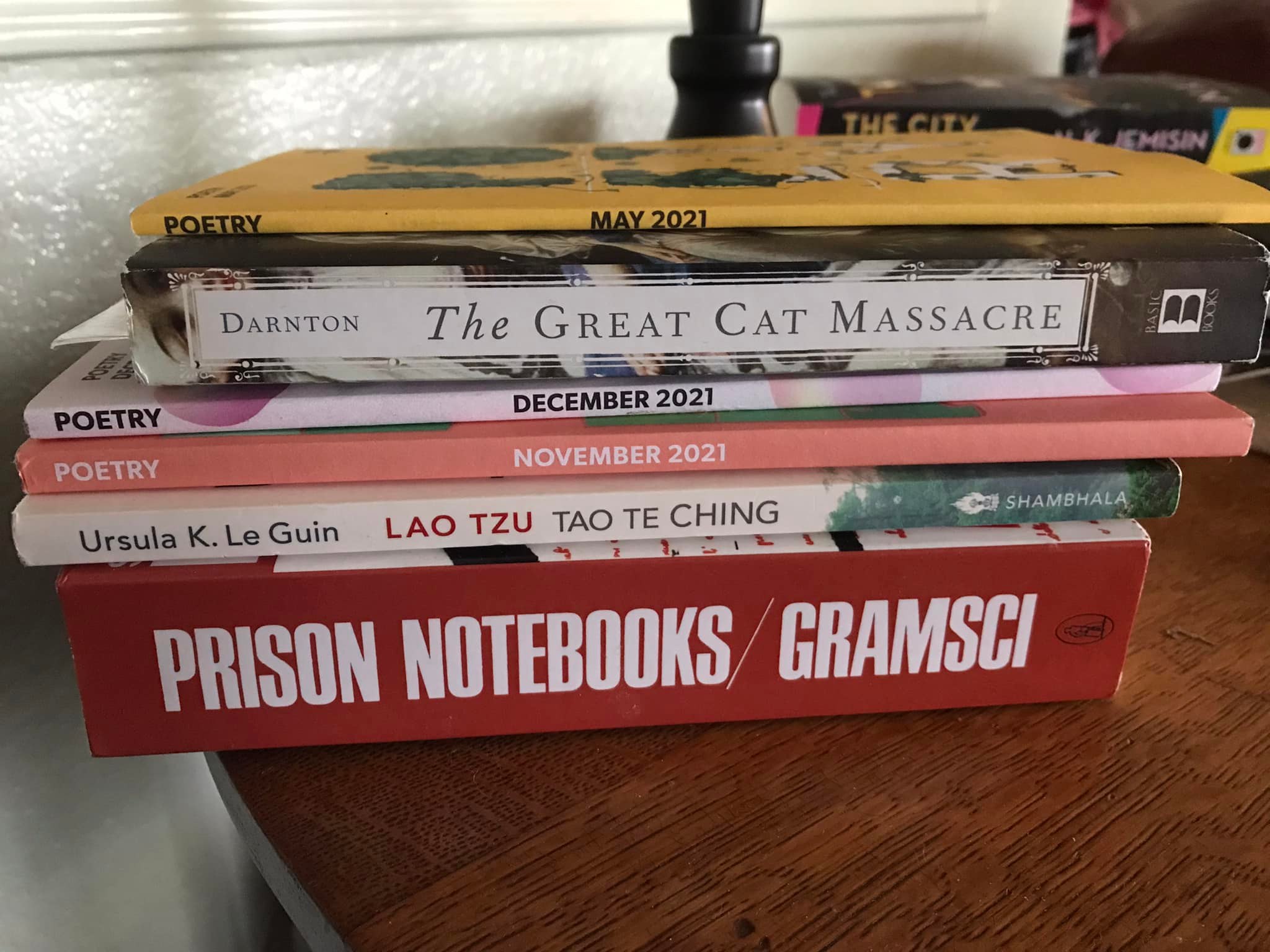
2021 books
I have seen a couple of people post what they read this year. So, being the follower that I am, I decided to post my list. I read constantly, some books I have been reading for years, and have never finished, but am still reading off and on. Some books I stop reading for various reasons: I lose interest, I lose the book in the house somewhere, the book gets shelved, I get bored, I know where it is going, the writing is just too pathetic to continue. Here is the list of books I finished (from beginning to end) this year. I stress finished, because this is not a complete list of what I have been reading. The pictures are current book piles around the house I am reading from.
Fantasyland—Kurt Anderson
Bestiary—Guillaume Apollinaire
Educated—Tara Westover
The Historians (twice)—Eavan Boland
Poetry as Insurgent Art— Ferlinghetti
Interior Chinatown by Charles Yu
At the Existentialist Cafe—-Sarah Blakewell
An Indigenous People’s’ History of the United States by Roxanne Dunbar-Ortiz
Under the Dome: walks with Paul Celan by Jean Daive
Norma Jean Baker of Troy by Anne Carson
The selected poems of Wendell Berry
Living Nations, Living Words edited and selected by Joy Harjo
An Unnecessary Woman—Rabid alameddine
Selected Poems of Guiseppe Ungaretti
Jimmy’s Blues by James Baldwin (selected poems)
How to be Antiracist by Ibram X. Kendi
Stone Lyre, poems by Rene Char
An Oresteia (Aiskhylos, Sophocles, Euripides) translated by Anne Carson
Self-Portrait in a Convex Mirror by John Ashbery
Waiting for the Barbarians by J.M. Coetzee
Sing Unburied Sing by Jesmyn Ward
First Person Singular by Haruki Murakami
The Buried Giant by Kazuo Ishiguro
Finna by Nate Marshall (twice)
Debths by Susan Howe
Dark City by Charles Bernstein
The Essential Jim Harrison, by Jim Harrison
Four Hundred Souls by Ibram X Kendi and Keisha N Blain
The Big Seven by Jim Harrison
Goldenrod by Maggie Smith
Life on Mars by Tracy K. Smith
Glottal Stop by Paul Celan
Asylum by Jill Bialosky
The Pill Versus the Springhill Mine Disaster by Richard Brautigan
After Ikkyu by Jim Harrison

certainty’s a razor’s edge
pressed lightly across skin
i draw a line along
the length of my arm
tracing a blue vein
a way in a way out
(May 4, 2021)

a different time with new shadows
wraps the light in different patterns
more random more abstract less fragile
less likely to crack like a beetle’s
carapace beneath my careless boots
I roam between my vacant days
then disappear easier than I thought
between quick ire and old resentments
like broken branches slip easily
with the river’s froth across smooth rocks
despite all the engrained justifications
despite the comprised and contradictory
narratives despite the feral rage
I am who I am stripped of language
laid down since birth like shrouds
(January 15, 2021)

 subtext