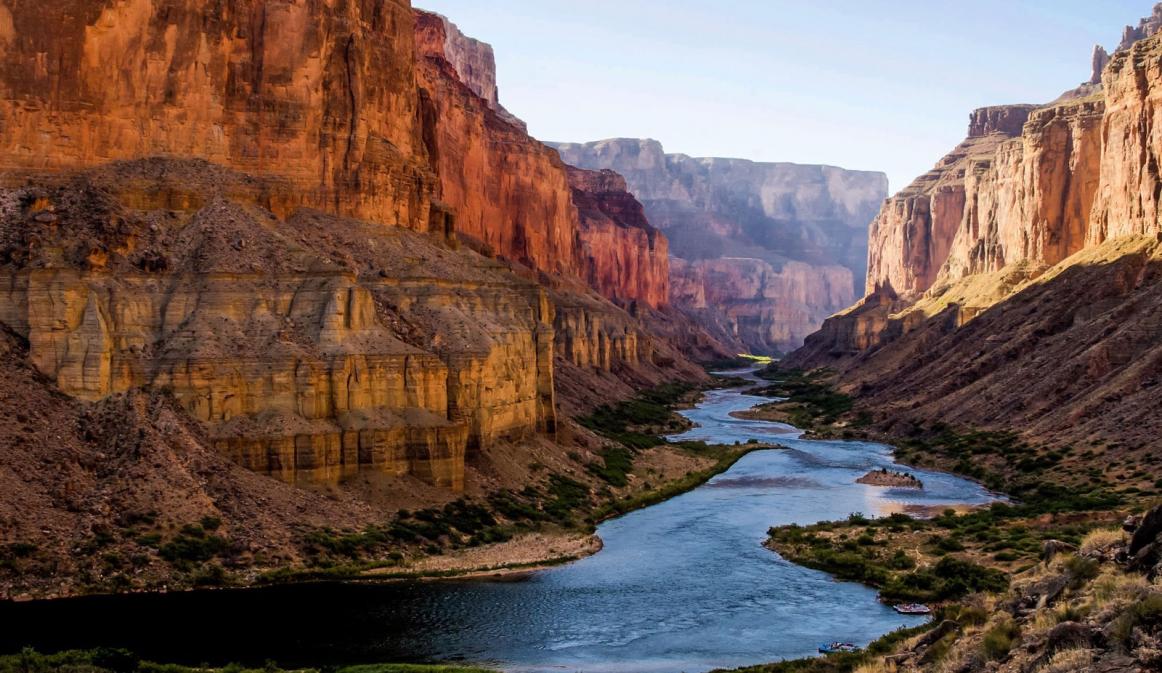
memory agitates into vision media res: the precise moment of peak self-revulsion, the inaction, the cowardice, the lie inherent in regret— when nothing more could have been done, nor anything now retroactively applied which can act as balm to the shame carried for decades through the day in those quiet moments on the way to work, waiting for the light to turn green, or some phrase, or song on the radio which tumbles memory’s cascade through the spongey canyons to again reconfigure itself into this contiguous present as some other story without static cause
I finished There are Rivers in the Sky a couple of days ago. Usually I try to respond as soon as I finish a book, but this time it had to ferment a bit before I could respond. Not that the couple of days more has made it more clear what I am thinking. We read one of her books, 10 Minutes 38 Seconds in This Strange World, for RFB last year. I really liked it, so I looked forward to reading Rivers in the Sky. Like 10 Minutes, Rivers is built around multiple story lines which by the end of the novel converge nicely without sounding forced. Both books stress the importance of community, 10 Minutes on a small group of divergent friends, whereas Rivers weaves a broader tapestry across centuries if not millennia. The connecting thread across time is the Mesopotamian Epic of Gilgamesh, the earliest written piece of world literature arising from the earliest civilization. Which of course, is significant to the novel as a whole. One of the story lines is set in Victorian England (the height of the English Empire), when England is pillaging the past Empires of relics and putting them on display in the British Museum. One of the relics they find is the before unknown Epic of Gilgamesh. It is found in fragments, over time, mainly in the abandoned ruins of the once great city of Nineveh. Another story line involves a small group of people, descended from the Sumerians, considered to be devil worshippers by the dominant religious groups. While the third story line, also descendants from the region of Mesopotamia, Iraq, who have immigrated to contemporary England. Through all three threads, the importance of story, the written word, tradition, and change flow like the rivers,(The Thames and Tigris), which dominate the imagery in the novel. The pollution, re-birth(in the case of the Thames), the destructive and nurturing aspects of the rivers and water in general are constantly in play. Overall it was an enjoyable experience.
One quote out of dozens I underlined: “Hatred is a poison in three cups. The first is when people despise those they desire—because they want to have them in their possession. It’s all out of hubris! The second is when people loathe those they do not understand. It’s all out of fear! Then there is the third kind—when people hate those they have hurt”
As if leading a ritual, the dogs wake me from dream. Their wet noses snuffle in my ear, scenting for traces of consciousness. I slowly collect myself, then escape down the stairs alone. Their task complete, the dogs curl into the warm shapes I leave behind in the tangled sheets. I’m cold, so I wrap myself in one of the brightly colored Mexican blankets Lisa bought more than twenty years ago along the border. Behind me on the counter, the coffee pot begins to gurgle and spurt. I watch through the sliding glass door as the leaves fall from the cottonwood and sycamore out back. Chasing squirrels most of the day, the dogs have worn two paths through the grass, each ending in the same place on the far side of the cypress at the bottom of the yard. These paths breathe cliche, no less so because mundane. The squirrels, out early, leap from tree to tree, dropping to the ground unmolested to collect acorns they buried, somehow remembering where they are months after the fact.








 subtext