subtext

My Poetry and Commentary on Life

  • This Writer’s Beginnings: EarlyYears
  • Bread Loaf Influence
  • Rock and Roll High School
  • About

Designed with WordPress

  • inevitable

    by

    acceptance, aging, floating world, haiku, hope, life, new year’s eve, paradigms, poetry, retirement, sonnets, tanka, time

    I make our dinner—

    noodles with snow peas and shrimp.

    She is not hungry.


    We have forgotten

    how many times we’ve been here.

    Decades of hope lost.


    Another year ends—

    Our pensions are still enough;

    the night darkly falls.


    We drink to forget—

    Tonight we dance a circle;

    again, we are here.


    Again, day falls into night.

    Life is inevitable.

    (New Year’s Eve, 2025)

    Share this:

    • Share on Facebook (Opens in new window) Facebook
    • Share on Tumblr (Opens in new window) Tumblr
    • Share on X (Opens in new window) X
    • Share on Bluesky (Opens in new window) Bluesky
    • Share on Threads (Opens in new window) Threads
    Like Loading…
  • Six New Year’s Eve Poems Written Over the Last 5 Years

    by

    haiku, new year’s eve, poetry, sonnets, tanka, time

    New Year’s Eve (2020)

    All day the rain fell

    Soaking the cold winter ground

    The year ends tonight

    (December 31, 2020)

    New Year’s Eve

    It’s all too simple—

    to watch the clock strike midnight:

    Dust settles to earth.
    Nothing much ever changes:

    we laugh, we sing, then we don’t.

    (December 31, 2021)

    another year

    the dogs bark out back

    again the wind ignores them

    each to their nature


    a warm new year’s eve

    ends the hottest year ever

    our world is burning


    we live deluded

    without trust in what we see

    shadows form our wall


    of course old leaves fall

    as easy as the sun sets—

    another new year


    the wind is only the wind

    the sun will rise without us

    (December 31, 2024)

    The Mundane Patterns Along the Way

    another day ends

    the night swallows the last light

    a new year begins


    the old clock rings out

    ten minutes behind the time

    the night knows no time


    fireworks break the light

    across the darkest of skies

    rain falls to the sea


    the morning is cold

    leaves have fallen from the trees

    for now the wind waits


    ring out bells ring in ring out

    ring in bells ring out ring in

    (January 1, 2024)

    New Year’s Day

    Day breaks once again;

    its unrelenting hunger

    devours us all.


    My end is my beginning;

    my beginning is my end.


    (January 1, 2022)

    A Few Days Past New Year’s

    Searching for something else,

    a honey bee dances around my head,

    Once, I would have jumped up

    waving him away; now,

    I shake my head, 

    and he floats away,

    as I will eventually.  Now

    with less time than I’ve had,

    there are no new beginnings

    just a slow unraveling.

    (January 3, 2020)

    Share this:

    • Share on Facebook (Opens in new window) Facebook
    • Share on Tumblr (Opens in new window) Tumblr
    • Share on X (Opens in new window) X
    • Share on Bluesky (Opens in new window) Bluesky
    • Share on Threads (Opens in new window) Threads
    Like Loading…
  • Quick Take on The Wonderful O by James Thurber

    by

    fable, hope, love, optimism, reader response, reading, silly, ways of knowing

    I finished The Wonderful O by James Thurber this afternoon. Thurber is so silly and delightful, while being deeply profound. The Wonderful O, like the other fables of Thurber is marketed as books for children, when they are far from sole audience. The Wonderful O is about two pirates who sail on the ship Aeiu, and hate the vowel O. They are searching for hidden treasure on the island of Ooroo. When they cannot find what they seek, they ban all words which contain the letter O. Cnfusin and Chas descend. The pirates become more and more oppressive with their hatred for O. The people resist, and eventually win out by holding on to four important words which contain O—Hope, Love, Valor, and what is seen as the most important word—Freedom. 

    It is obviously a fable for our own times although written 68 years ago.

    Share this:

    • Share on Facebook (Opens in new window) Facebook
    • Share on Tumblr (Opens in new window) Tumblr
    • Share on X (Opens in new window) X
    • Share on Bluesky (Opens in new window) Bluesky
    • Share on Threads (Opens in new window) Threads
    Like Loading…
  • Family Rooms

    by

    acceptance, aging, awareness, change, communication, conversation, family, meaning, memory, poetry, present, sonnets, storytelling, ways of knowing

    Memory is all that we are,

    and all that we are is what

    we remember. These days

    I often forget why I enter

    a room as I enter. I’m forced

    to wait on the blurred past 

    with its dead possibilities 

    to catch up to my present.


    We sit comfortably couched

    about the room. We confess

    our stories again, shifting

    scenes to allow for shapes

    which differ, to be polite,

    from others in other rooms.

    (December 28, 2025)

    Share this:

    • Share on Facebook (Opens in new window) Facebook
    • Share on Tumblr (Opens in new window) Tumblr
    • Share on X (Opens in new window) X
    • Share on Bluesky (Opens in new window) Bluesky
    • Share on Threads (Opens in new window) Threads
    Like Loading…
  • Quick Response to Dreamtigers by Jorge Luis Borges

    by

    books, identity formation, literature, memory, reader response, reading

    “So many of us use when at our craft/of transmuting our life into words.//The essence is always lost.”

    I have read three other books by Borges over the years: Labyrinths, The Book of Sand, and Ficciones. They have all been thought provoking and strange. I first heard of Borges as a fictional character in Umberto Eco’s “The Name of the Rose,” which makes sense as I finished “Dreamtigers” this afternoon. In “Dreamtigers” one of the themes Borges causes the reader to think about is identity. Specifically who is the real “Borges” (and us by extension) the one created by us that we present to the world as us, or the one that created the presentation. “Dreamtigers” is divided into two sections. The first comprised of parable-like reflections revolving around themes of memory, identity, creativity, and mirrors. The second section made up of poems, which touch upon similar themes and images. One of the ideas that have lingered with me after finishing the book is the thought that our unique experience of life which each of us possess and create though our life…vanishes as we die. “Events far-reaching envoy to people all space, whose end is nonetheless tolled when one man dies, may cause us wonder. But something, or an infinite number of things, dies in every death, unless the universe is possessed of a memory, as the theosophists have supposed.”  I know that this is obvious, but also profound. Nietzsche said that in the end we only experience ourselves. And Borges extends this with the thought that this individual experience dies with the life of the person.  Unless as he says, the universe possess a memory. And even then, that memory is changed and erased by the future which remembers us in their own individual experiences. “There is not a single thing on earth that oblivion does not erase or memory change, and when no one knows into what images he himself will be transmuted by the future.”

    Share this:

    • Share on Facebook (Opens in new window) Facebook
    • Share on Tumblr (Opens in new window) Tumblr
    • Share on X (Opens in new window) X
    • Share on Bluesky (Opens in new window) Bluesky
    • Share on Threads (Opens in new window) Threads
    Like Loading…
  •  as if entering an ongoing party conversation

    by

    abstract, agency, conversation, inner speech, liminal, memory, poetry, present, prose poem, regret, revision, storytelling, transition

    memory agitates into vision media res: the precise moment of peak self-revulsion, the inaction, the cowardice, the lie inherent in regret— when nothing more could have been done, nor anything now retroactively applied which can act as balm to the shame carried for decades through the day in those quiet moments on the way to work, waiting for the light to turn green, or some phrase, or song on the radio which tumbles memory’s cascade through the spongey canyons to again reconfigure itself into this contiguous present as some other story without static cause 

    (December 25, 2025)

    Share this:

    • Share on Facebook (Opens in new window) Facebook
    • Share on Tumblr (Opens in new window) Tumblr
    • Share on X (Opens in new window) X
    • Share on Bluesky (Opens in new window) Bluesky
    • Share on Threads (Opens in new window) Threads
    Like Loading…
  • The Poet Listens Bemused

    by

    agency, creativity, difference, Language and Literacy, life, literature, poetry, privilege, response, significance, trust, ways of knowing, writing

    There is a difference he implied

    between what you do— (write

    your poems), and this book—

    which had been published

    and which he now held out 

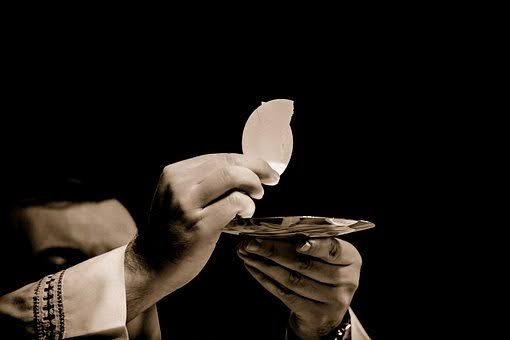
    (like a capitalist Eucharist)

    before him as empirical evidence

    of his claim’s veracity; the attention

    toward profundity, cannot simply be. 

    Cannot simply happen. As if 

    there were no luminescence

    inherent in the creative act,

    no value to the happenstance.

    Yet it does happen, 

    as we happen. The ineffable silence

    fills in what cannot be said—

    no matter the credentials, or what

    god waits to make the first move.

    The writing, the process, the evolution 

    of the text opens the word into light,

    and power, and even glory

    as has been done forever and ever.

    (December 23, 2025)

    Share this:

    • Share on Facebook (Opens in new window) Facebook
    • Share on Tumblr (Opens in new window) Tumblr
    • Share on X (Opens in new window) X
    • Share on Bluesky (Opens in new window) Bluesky
    • Share on Threads (Opens in new window) Threads
    Like Loading…
  • Quick Response: Brightly Shining

    by

    literature, melodrama, reader response, reading, sadness

    I guess I am just a cold hearted humbug. I finished reading Brightly Shining by Ingvild Rishoi over the last couple of days, and found it to be a sad little retelling of the Matchstick Girl. I went to the internets to see if what I saw was not just my bitter heart. Most of others opinions loved the book for its Charles Dickins-like Christmas sadness. It just seemed all so predictable and pat. One reviewer compared it to Barbara Kingsolver’s reworking of David Copperfield in her Demon Copperhead…but I don’t think Brightly Shining holds up to that comparison. There is just not that much there. It is just a sad story about two young girls who have to deal with an alcoholic father during the run up to Christmas. I have to admit when I first picked up the book for RFB (my book group) I though it looked like a Hallmark Christmas Rom-Com. In its favor it wasn’t that, instead it was a sad tale about being poor and caught up in troubles larger than a child can handle. I’m sure it makes many shed a tear or two. But not me.

    Share this:

    • Share on Facebook (Opens in new window) Facebook
    • Share on Tumblr (Opens in new window) Tumblr
    • Share on X (Opens in new window) X
    • Share on Bluesky (Opens in new window) Bluesky
    • Share on Threads (Opens in new window) Threads
    Like Loading…
  • The Asymmetry of Incremental Change

    by

    aging, beauty, change, cycle, definition, life, meditation, metaphor, mythic, nature, optimism, paradigms, patterns, poetry, religion, solstice, ways of knowing

    It’s the lopsided charm

    of this day’s superlatives—

    the shortest day,

    the longest night,

    which for millennia 

    provided power 

    to the metaphor

    for hope to console us

    with heavenly promise

    that peace will return

    as easily as morning light

    washes over dark stone.

    (Winter Solstice, December 21, 2025)

    Share this:

    • Share on Facebook (Opens in new window) Facebook
    • Share on Tumblr (Opens in new window) Tumblr
    • Share on X (Opens in new window) X
    • Share on Bluesky (Opens in new window) Bluesky
    • Share on Threads (Opens in new window) Threads
    Like Loading…
  • Quick Take of Rub Out by Ed Barrett

    by

    art, books, creativity, literature, poetry, reader response, reading

    I finished Rub Out by Ed Barrett last night. I have no idea where or when I bought this book. But I found it on my shelf a few months back and have been reading at it since then. It is an interesting set of poems as a mystery novel/1940’s crime noir as if written by John Ashbery. I’m thinking I need to read it again, over a shorter amount of time. I also think I should find someone to read it with, so that I have someone to talk to about it. Here is a quote I copied down several weeks ago: “expectation outweighs desire for most of life”

    Share this:

    • Share on Facebook (Opens in new window) Facebook
    • Share on Tumblr (Opens in new window) Tumblr
    • Share on X (Opens in new window) X
    • Share on Bluesky (Opens in new window) Bluesky
    • Share on Threads (Opens in new window) Threads
    Like Loading…
  • To What Purpose Disturbing the Dust on a Bowl of Rose-Leaves I Do Not Know

    by

    aging, beauty, books, conversation, interpretation, literature, Modernism, poetry

    It has been several decades, at least, since I read Eliot’s Four Quartets from beginning to end in one sitting. But since the poem came up in a conversation a couple of days ago, and Lisa has gone out of town, I read them out loud to myself in one go. It is an amazing work of art: time, faith, God, identity, sense of place, abstract while being incredibly precise in concrete details which fold back into the abstract. The usual allusions to everything in world literature and religion, but so subtle and fast it becomes as if you are reading about Jonah, Arjuna, Charles the 2nd, and many others for the first time. And such a magisterial voice and a musicality which lifts the reader to intellectual heights before they realize what is happening. When, 30 years ago, I read The Quartets for a class on the Modern long poem, Walt Litz, my prof, described it as “philosophical poetry, not philosophy as poetry.” If you haven’t read it, and want something deep, but not as daunting and dark as The Wasteland, then you should read it. It made me think about the first time I heard Beethoven’s Ninth, or Handel’s Messiah all the way through. And if you have read it, then it might be time to look again. I remember reading once that different poets often speak to you differently at different times of your life. The Four Quartets speak differently now than they once did. “My words echo/ thus in your mind.”

    (December 16, 2025)

    Share this:

    • Share on Facebook (Opens in new window) Facebook
    • Share on Tumblr (Opens in new window) Tumblr
    • Share on X (Opens in new window) X
    • Share on Bluesky (Opens in new window) Bluesky
    • Share on Threads (Opens in new window) Threads
    Like Loading…
  • Predicting the Future

    by

    acceptance, agency, aging, ambition, attention, awareness, chance, change, clarity, fate, future, patience, patterns, poetry

    I’ve tossed yarrow stalks on a table,

    and stared blankly at arcane cards

    pretending at small divinations.


    Last week I’ve been reading poetry

    that survived orally for millennia

    before copied slowly onto a page.


    I’ve done all these things before,

    so much so I almost recognize

    the footprint’s patterns in the sand.


    Each morning repeats itself:

    I let the dogs out, start coffee, piss,

    as if the sun wouldn’t rise otherwise.


    Yet, it does, as it will again:

    so starkly beautiful, so new.

    (December 15, 2025)

    Share this:

    • Share on Facebook (Opens in new window) Facebook
    • Share on Tumblr (Opens in new window) Tumblr
    • Share on X (Opens in new window) X
    • Share on Bluesky (Opens in new window) Bluesky
    • Share on Threads (Opens in new window) Threads
    Like Loading…
  • Another Day in America

    by

    anger, awareness, broken, choice, irony, lament, life, poetry, response, social construction

    It happens right here

    in front of us:

    close enough to feel

    the blood splatter;

    close enough to hear

    her lungs wheeze;

    close enough to smell

    the rusty wet iron.


    We shrug and move on.

    What’s there to do?

    But scream,

    and point fingers;

    then wake up to start

    another day in America.

    (December 25, 2025)

    Share this:

    • Share on Facebook (Opens in new window) Facebook
    • Share on Tumblr (Opens in new window) Tumblr
    • Share on X (Opens in new window) X
    • Share on Bluesky (Opens in new window) Bluesky
    • Share on Threads (Opens in new window) Threads
    Like Loading…
  • Flee

    by

    agency, awareness, change, community, friends, hope, identity formation, life, list poem, lists, meaning, optimism, poetry, trust, ways of knowing

    a turn away

    from pursuit

    from a life

    from himself


    an escape

    from others

    from definition

    from self-immolation


     a denial

    of projection

    of supposition

    of expectation


    a purge

    of arrogance

    of shame

    of the soul’s anger


    a belief

    in the present

    in hope

    in simplicity


    a meaning

    in the chaos

    in the day

    in himself


    a direction

    toward difference

    toward laughter

    toward each other


    a movement

    toward trust

    toward friends

    toward love

    (December 9, 2025)

    Share this:

    • Share on Facebook (Opens in new window) Facebook
    • Share on Tumblr (Opens in new window) Tumblr
    • Share on X (Opens in new window) X
    • Share on Bluesky (Opens in new window) Bluesky
    • Share on Threads (Opens in new window) Threads
    Like Loading…
  • rain

    by

    acceptance, attention, autumn, change, floating world, life, poetry, present, samsara, ways of knowing, zen

    a soft drought-ending rain

    falls overnight

    and into the morning


    one lives

    within the moment

    only


    when one understands

    there is nothing

    to stand under


    and lets the rain

    without metaphor

    wash over you

    (December 8, 2025) 

    Share this:

    • Share on Facebook (Opens in new window) Facebook
    • Share on Tumblr (Opens in new window) Tumblr
    • Share on X (Opens in new window) X
    • Share on Bluesky (Opens in new window) Bluesky
    • Share on Threads (Opens in new window) Threads
    Like Loading…


«Previous Poem Next Poem»

Loading Comments...

    • Subscribe Subscribed
      • subtext
      • Join 407 other subscribers
      • Already have a WordPress.com account? Log in now.
      • subtext
      • Subscribe Subscribed
      • Sign up
      • Log in
      • Report this content
      • View site in Reader
      • Manage subscriptions
      • Collapse this bar
    %d